
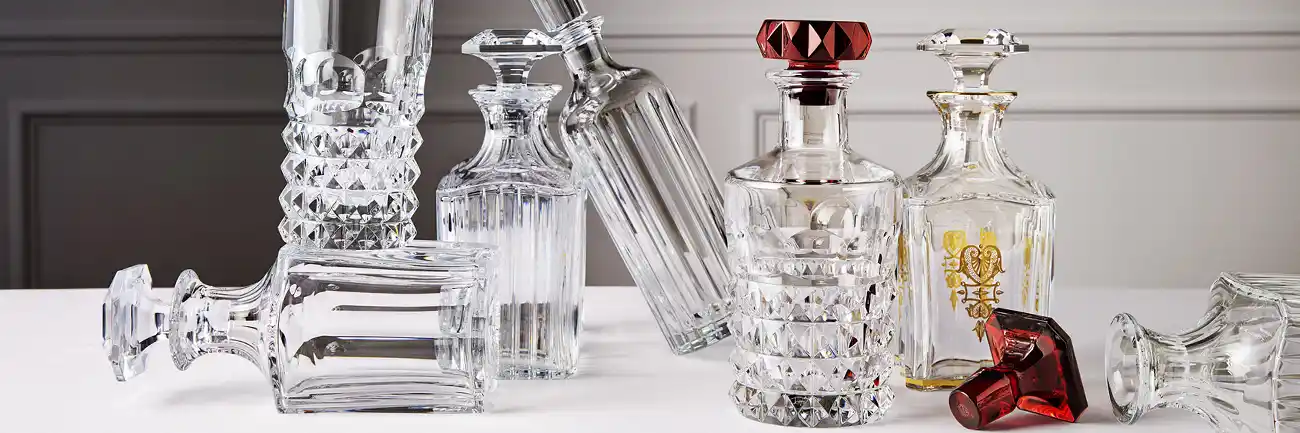
A crystal decanter is the one object on a drinks tray that everybody notices. It turns a bottle into a ritual, catches the light across a room, and gives a good spirit the stage it deserves. But there is more to choosing one than picking the prettiest silhouette — including one practical question about lead crystal that most guides quietly skip. Here is what actually matters.
What a crystal decanter is for
Worth being clear, because it differs from its cousin. A wine decanter exists to aerate wine and leave sediment behind — it is a working tool with a chemical purpose, covered fully in our guide to the wine decanter. A crystal decanter for spirits does something different: whisky, cognac and rum do not improve with air, and nothing needs separating.
Its purpose is presentation and pleasure. It frees a fine spirit from a supermarket-shelf label and presents it as amber light in cut crystal. It makes pouring an occasion rather than an action. And it turns a sideboard into something that looks considered. That is not a lesser purpose — it is simply an honest one, and it explains why a decanter is judged on beauty and engineering rather than on chemistry.
The lead crystal question, answered honestly
Here is the part worth knowing before you buy. Traditional lead crystal contains lead oxide — historically at least 24% — which is precisely what gives it that weight, clarity and brilliance (the defining property of lead crystal). Alcohol, over long periods, can draw small amounts of that lead out of the glass. The practical upshot is straightforward: a lead crystal decanter is perfectly suited to serving, but it is not the right vessel for storing spirits for months or years at a time.
So what should you do? Two sensible options. Use a lead crystal decanter the way it was always meant to be used — decant what you will drink over the coming days or weeks, then refill. Or choose a modern lead-free crystal decanter, which uses barium, zinc or potassium to achieve comparable brilliance and resonance with none of the storage caveat. Many of the great houses now produce both. Neither choice is wrong; knowing the difference simply means you buy the right one for how you actually live.
Choosing the shape
Spirit decanters come in a few recognisable forms, and the choice is largely aesthetic — with one or two practical wrinkles.
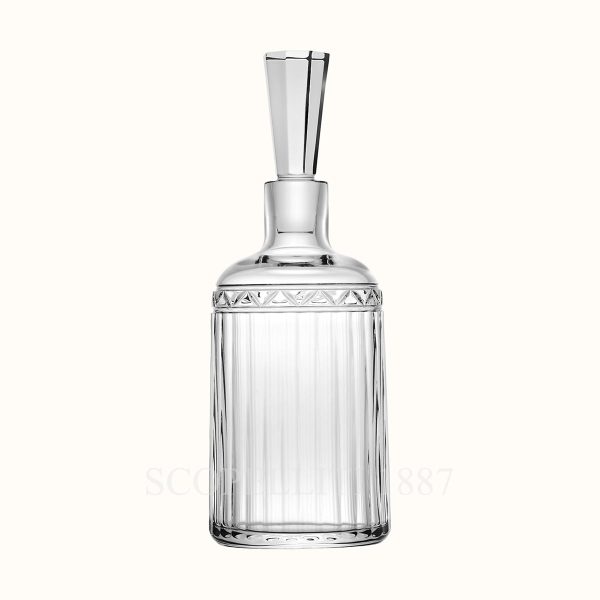
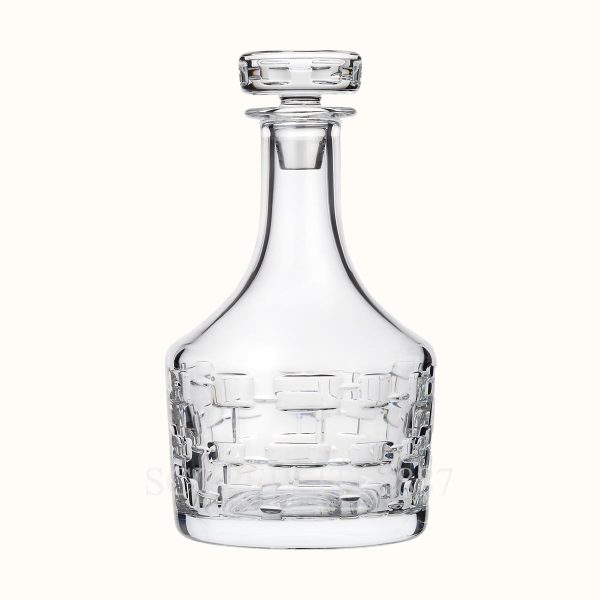
The square or ship’s decanter, broad-based and solid, is the classic whisky vessel: stable, weighty, unmistakably masculine in the traditional idiom, and almost impossible to knock over. The globe or spherical form reads more contemporary and shows off a spirit’s colour from every angle. Tall, tapered designs suit a modern interior and take up little tray space. And sculptural or figurative decanters from the great maisons cross into art object territory entirely.
Practical checks regardless of shape: can you get your hand or a brush inside to clean it, does the neck pour cleanly without dribbling down the body, and is it comfortable to lift when full? A decanter that pours badly will irritate you every single evening.
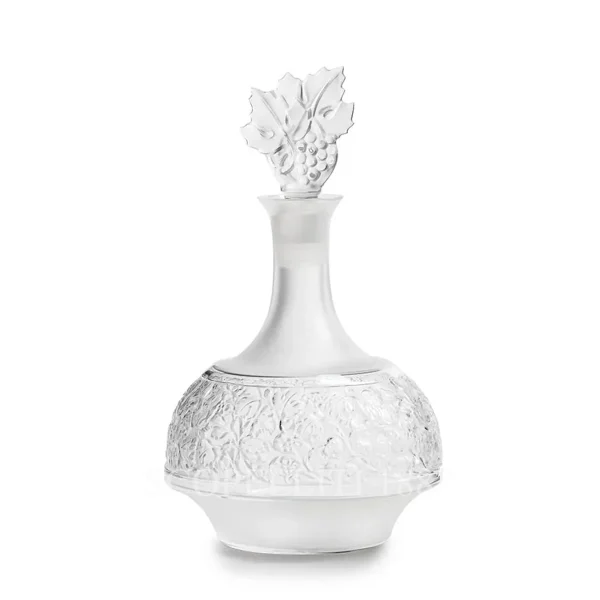
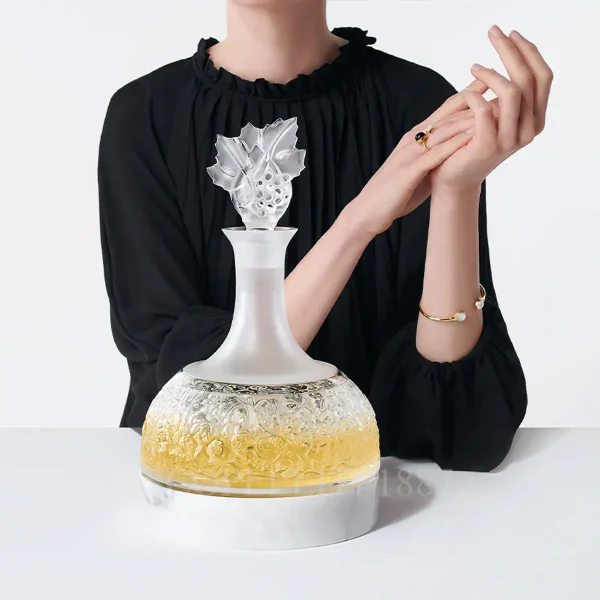
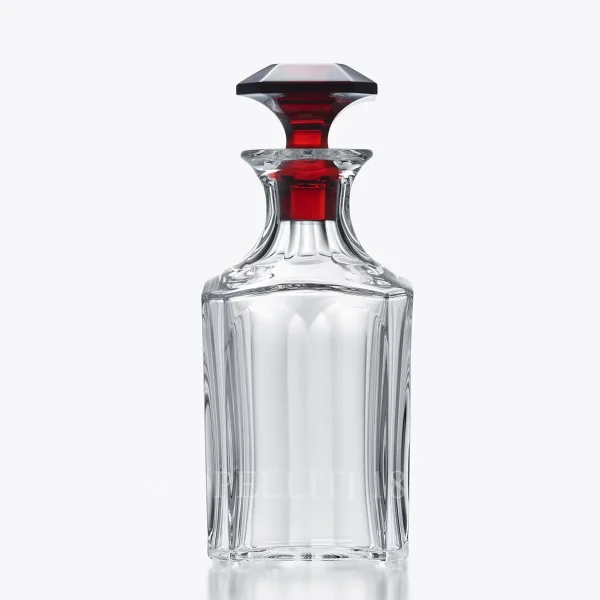
The stopper is not a detail
More decanters are ruined by their stoppers than by anything else. A good one is ground to fit its individual decanter — which means stoppers are not interchangeable between pieces, and losing one is genuinely a problem. It should seat firmly and lift out without a fight.
Test the seal before you commit: a loose stopper lets a spirit oxidise and slowly lose its character, while one that jams can crack the neck when someone forces it. And the everyday rule that saves the most heartbreak — never store the decanter with the stopper wedged in while the interior is even slightly damp. That is how you create both a stuck stopper and a musty smell in one move.
Building a proper drinks tray
A decanter rarely works alone. The classic composition pairs it with matching tumblers in the same pattern — a set that reads as one considered gesture rather than an accumulation. If whisky is the point, the shape of the glass matters as much as the decanter does; our guide to crystal whisky glasses covers how the tumbler and the nosing glass differ, and why it matters.
Add a tray to anchor the arrangement, an ice bucket if you entertain, and you have a bar that looks deliberate. Two decanters — one for whisky, one for cognac — is the traditional pairing, and there is a reason it has never gone out of style. See the range in our decanters and pitchers collection.
Care, and the gift that keeps its shine
Rinse with warm water and dry thoroughly, inverted on a stand with the stopper set aside until every trace of moisture has gone. Avoid detergent where you can and avoid the dishwasher entirely — its heat and harsh detergents will cloud fine crystal permanently, and that damage cannot be undone.
Few gifts land as well as a crystal decanter for a milestone — a retirement, a significant birthday, a wedding. It is used, admired, and remembered, and it carries the weight of an heirloom without ever feeling stuffy. As an authorized retailer of the world’s leading crystal houses for more than 130 years, Scopelliti 1887 chooses each piece for that rare combination of beauty and daily usefulness. For the wider context on how decanters sit within fine crystal, start with our guide to luxury crystal glassware.
Key points at a glance
A crystal decanter for spirits exists for presentation rather than aeration — whisky, cognac and rum gain nothing from air, unlike wine. One practical point matters: traditional lead crystal contains lead oxide, and alcohol can draw small amounts out over long periods, so lead crystal is ideal for serving but not for storing spirits for months or years.
Use it for what you will drink soon, or choose modern lead-free crystal for equivalent brilliance without the caveat. Pick a shape that suits your interior — square ship’s decanters for stability, globes for showing colour, tapered forms for modern rooms — and check it cleans, pours and lifts well. The stopper is critical: ground to its own decanter, firm-sealing, never stored in a damp interior. Rinse, dry inverted, and never use a dishwasher.
Frequently asked questions about crystal decanters
Is it safe to store spirits in a lead crystal decanter?
Lead crystal is well suited to serving, but not to long-term storage: alcohol can draw small amounts of lead from the glass over months or years. Decant what you will drink in the coming days or weeks, or choose a modern lead-free crystal decanter, which offers comparable brilliance without the concern.
What is the difference between a wine decanter and a crystal decanter for spirits?
A wine decanter aerates wine and separates sediment — it has a functional, chemical purpose. A spirits decanter is about presentation: whisky, cognac and rum do not benefit from air, so the piece is judged on beauty, pouring and the quality of its stopper.
Why is my decanter stopper stuck?
Usually because the decanter was sealed while still damp inside. Stoppers are ground to fit one specific decanter and are not interchangeable. Always dry the interior completely, inverted on a stand, and store the piece with the stopper set alongside rather than in place.
How do you clean a crystal decanter?
Rinse with warm water, using decanter beads or a soft brush for stubborn marks, and avoid detergent where possible. Never put fine crystal in the dishwasher — heat and harsh detergents cloud the surface permanently. Dry inverted on a stand with the stopper removed.
Give a good spirit the setting it deserves
Choose a shape you will enjoy looking at every evening, check the stopper seats properly, and be honest with yourself about whether you are serving or storing. Get those three right and a crystal decanter becomes the piece of your home that guests always remark on.
Explore crystal decanters at Scopelliti 1887 — discover our decanters and pitchers collection, or speak with our advisors to find the piece that suits your bar.