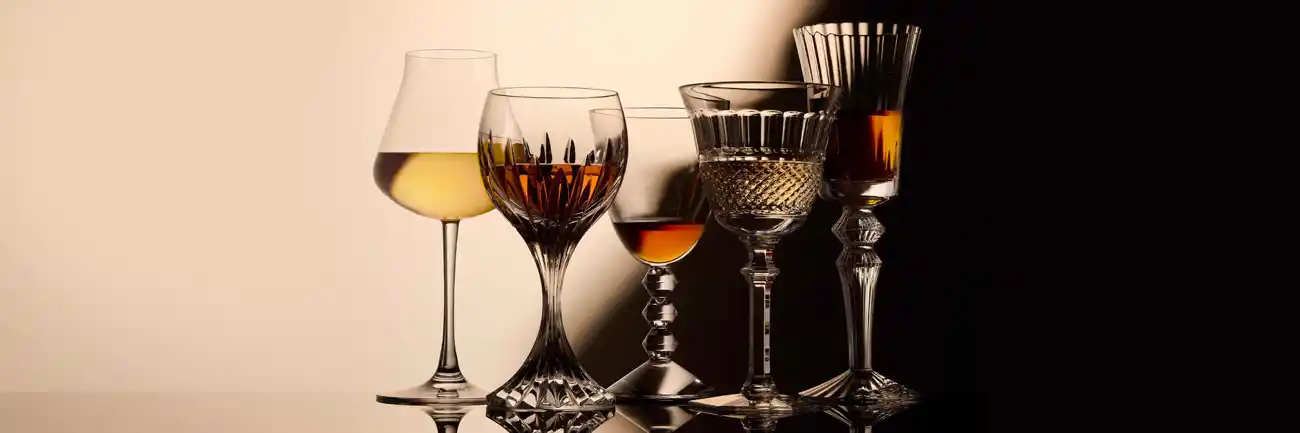
Crystal wine glasses do something that surprises people the first time they notice it: they change how the wine tastes. Not by magic, and not by suggestion — by physics. The material, the thickness of the rim and the shape of the bowl each alter what reaches your nose and your palate. Choose well and an ordinary bottle drinks better; choose badly and a fine one is muffled. Here is how to build a set that earns its place.
Why crystal, and not simply glass
Three practical differences, all of which you can feel.
The first is thinness. Crystal’s mineral content makes it stronger for its weight than ordinary glass, so it can be blown into a far finer bowl and a rim so delicate the wine seems to arrive on your lip without an intermediary. A thick, rolled rim, by contrast, lands the wine on your tongue in a clumsy wave — you taste the glass before the wine. The second is clarity: fine crystal is water-clear, letting you read a wine’s true colour and depth rather than a greenish approximation of it.
The third is subtler and rather lovely. The surface of crystal is fractionally less smooth at a microscopic level than machine-made glass, and that texture gives a wine’s aromatic compounds more to work with when you swirl. More aroma released means more flavour perceived, because most of what we call taste is smell. Add the brilliance and the ringing tone, and the case makes itself. The material itself — lead crystal, lead-free crystal and how to judge quality — is covered fully in our guide to luxury crystal glassware.
The anatomy of a great wine glass
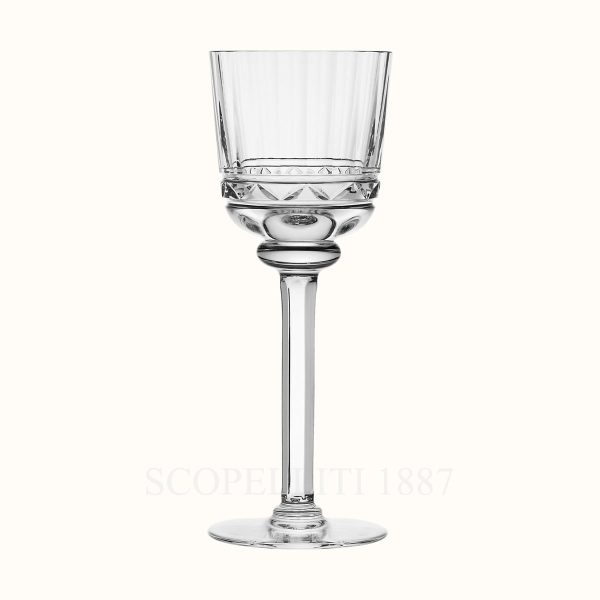
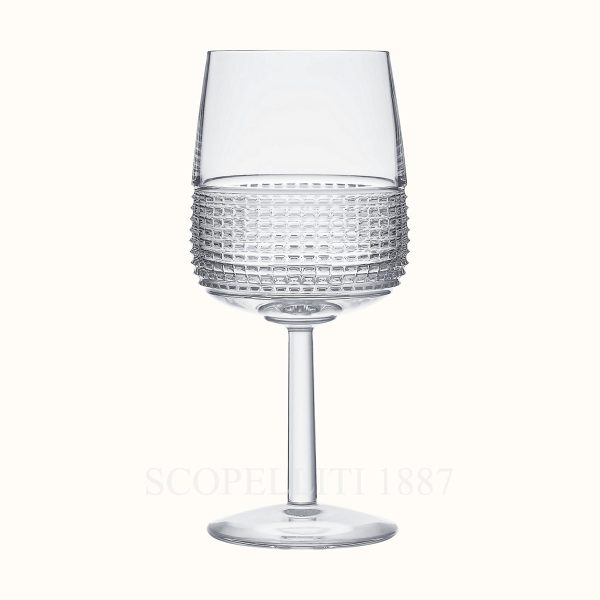
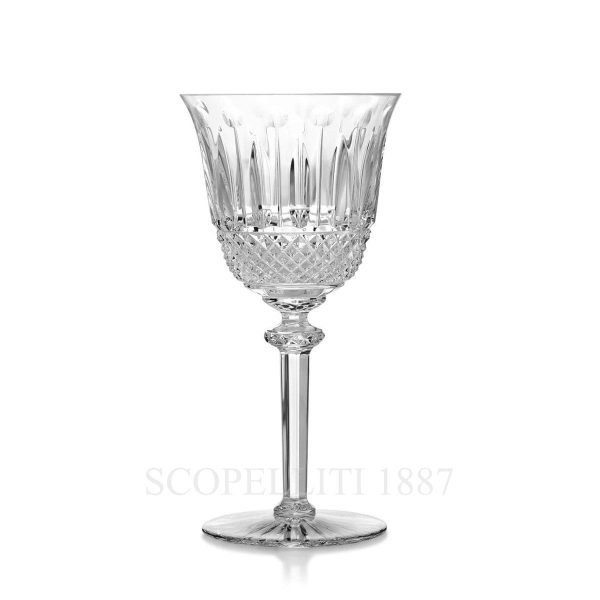
Every part does a job. The bowl holds the wine and gathers its aroma, and its width determines how much air the wine meets. The rim — ideally cut and polished rather than rolled — decides how the wine enters your mouth and where it lands on the palate. A bowl that tapers inward at the top concentrates the perfume; one that flares directs the wine differently across the tongue.
The stem is not decoration: it exists so your hand never touches the bowl, because body heat will warm a carefully chilled wine within minutes. And the foot keeps the whole thing stable — a glass that tips easily is a glass you will replace. When you pick one up, it should feel poised rather than heavy, with the weight sitting low and the bowl feeling almost weightless. That balance is the mark of a maker who knows what they are doing (the standard anatomy of the wine glass).
Matching the bowl to the grape
This is where the specialists earn their reputation, and the logic is simpler than it looks.
Big, bold reds — the muscular, tannic styles — want a large, wide bowl. More surface area means more air, which softens tannins and lets a powerful wine unfurl. Elegant, aromatic reds prefer a rounder, balloon-like bowl that traps a delicate perfume and delivers it in a concentrated rush. White wines take a smaller, narrower bowl: less air, less warming, and a crisper delivery that keeps acidity bright. Dessert and fortified wines need only a small glass, since the pour is modest and the flavours are already intense.
Does this matter, or is it marketing? Try the same red from a narrow white-wine glass and then from a proper wide bowl. The difference is not subtle — most people are slightly annoyed by how obvious it is. That said, you do not need eleven shapes. Two well-chosen ones will serve you honestly for years.
How many glasses do you actually need?
Here is a practical answer rather than an aspirational one. For most households, a set of six or eight universal glasses — a medium bowl that handles reds and whites capably — covers ninety per cent of life. Add a set of six large-bowled reds if you drink serious reds often, and a set of Champagne glasses for celebrations, and you have a complete cabinet.
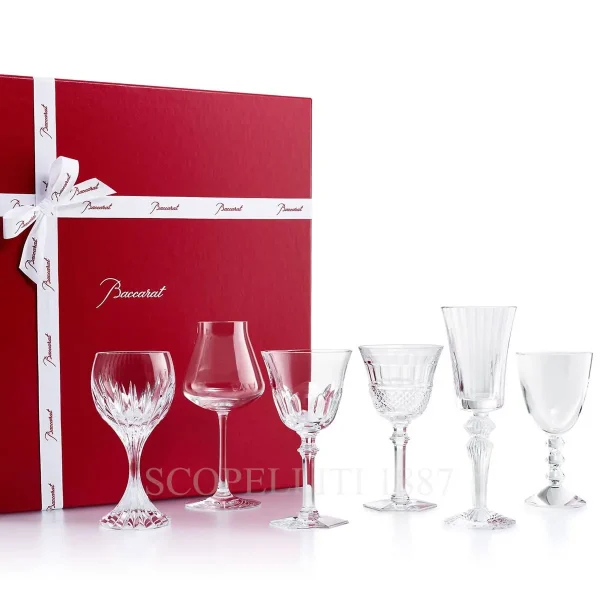
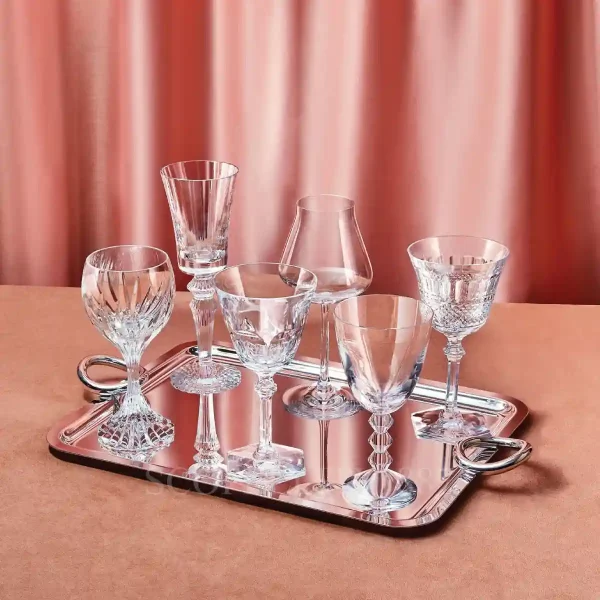
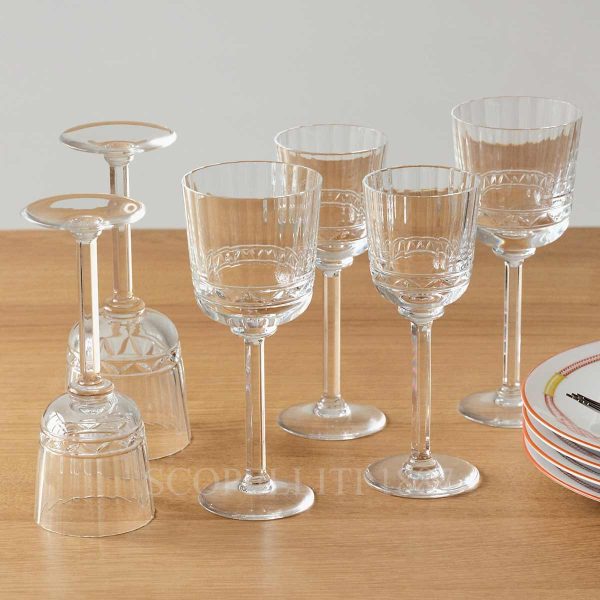
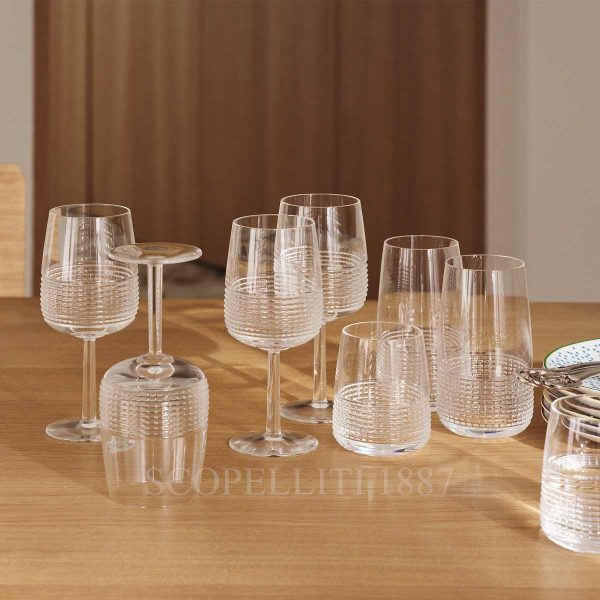
Buy for the number of guests you actually host, not the number you imagine. A complete, beautiful service for six beats a mismatched dozen every time — and when one inevitably breaks, a set from an established house is far easier to replace. Explore the shapes in our wine glasses collection, where each maison’s approach to the bowl is on full display.
Getting the most from the glass
Pour to the widest point of the bowl and no further — usually about a third full. It looks modest; it is correct. That leaves the headspace where the aroma collects, which is the entire reason the bowl is shaped as it is. Fill a glass to the brim and you have turned a precision instrument into a beaker.
Hold by the stem, swirl gently to wake the wine, and let it settle before you drink. If the bottle is young and tight, a spell in a wine decanter before it ever reaches the glass will do more for it than any amount of swirling.
Caring for crystal stemware
Hand wash in warm — never hot — water with a mild detergent, one glass at a time, over a padded sink or a folded towel. Dry immediately with a soft, lint-free cloth, holding the bowl rather than twisting the stem: nearly every broken glass in history was snapped by someone drying it with a twist.
Store stemware upright rather than resting on the rim, which is by far the most fragile part, and avoid sudden temperature swings. Fine crystal treated with this small courtesy lasts decades — and as an authorized retailer of the world’s leading crystal houses for more than 130 years, we have seen plenty of sets outlive the tables they were bought for.
Key points at a glance
Crystal wine glasses genuinely improve the drinking experience: crystal’s strength allows a finer bowl and a thinner rim, its clarity shows the wine’s true colour, and its microscopically textured surface releases more aroma when swirled. Every part has a purpose — the bowl gathers perfume, the rim controls delivery, the stem keeps your hand off the wine, the foot gives stability.
Match bowl to grape: wide bowls for bold tannic reds, rounder balloons for delicate aromatic reds, narrower bowls for whites, small glasses for dessert wines. For most homes, six to eight universal glasses plus a set of large reds and Champagne glasses is enough. Pour to the widest point of the bowl, hold by the stem, hand wash in warm water, dry without twisting and store upright.
Frequently asked questions about crystal wine glasses
Do crystal wine glasses really make wine taste better?
Yes. Crystal can be blown thinner, so the rim delivers wine more cleanly to the palate, and its slightly textured surface releases more aroma when the wine is swirled. Since most of what we perceive as taste is smell, more aroma means more flavour.
What shape of wine glass should I use for red and white wine?
Bold, tannic reds suit a large, wide bowl that maximises air contact; delicate aromatic reds prefer a rounder, balloon-shaped bowl that concentrates perfume. White wines are better in a smaller, narrower bowl that limits air and warming, keeping the acidity crisp.
How full should you fill a wine glass?
Pour to the widest point of the bowl — roughly a third full. The empty space above the wine is where the aromas collect, which is exactly what the bowl is shaped to do. Overfilling defeats the design of the glass.
Can crystal wine glasses go in the dishwasher?
Hand washing is strongly recommended for fine crystal. Use warm — never hot — water with mild detergent, wash one glass at a time over a padded sink, dry immediately with a soft cloth holding the bowl rather than twisting the stem, and store upright.
Drink the wine you actually bought
The right glass does not flatter a wine — it simply stops getting in the way of it. Pick a fine rim, a bowl suited to what you drink, and a maker with real pedigree, and every bottle you open from now on will give you a little more than it did before.
Explore crystal wine glasses at Scopelliti 1887 — browse the luxury stemware collection, or speak with our advisors to build a set around the wines you love.