
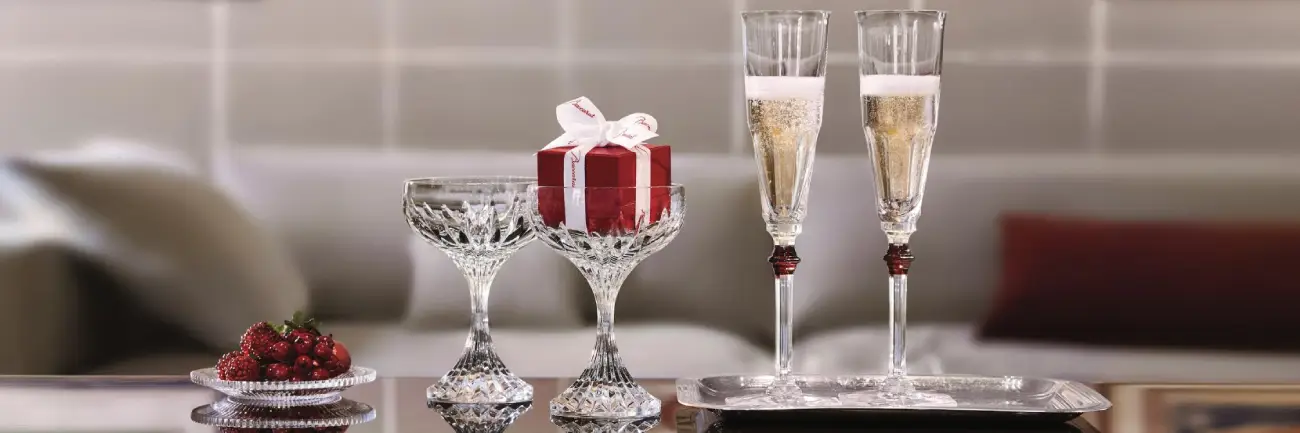
Luxury crystal glassware is one of those rare purchases where the difference between fine and ordinary is something you can see, feel and even hear. Hold a piece of true crystal to the light and it gathers brilliance; tap the rim and it sings. This 2026 buyer’s guide explains what actually separates luxury crystal from everyday glass, how to judge quality with confidence, and how to choose pieces that will grace your table for a lifetime.
What makes glassware “crystal” in the first place
The word gets used loosely, so it helps to be precise. Traditional crystal is glass enriched with minerals – historically lead oxide – which raises the refractive index and gives the material its signature sparkle, weight and clarity. The higher the mineral content, the more light the glass bends and the more it glitters. Full lead crystal has long been defined by a lead oxide content of at least 24%, with finer grades reaching higher still (the historical standard for lead crystal).
Modern maisons increasingly produce lead-free crystal, replacing lead oxide with minerals such as barium, zinc or potassium. The result keeps the brilliance and resonance that collectors prize while being better suited to everyday drinking and easier to care for. Both routes can be exceptional. What matters is the quality of the formula, the purity of the raw materials, and above all the hand of the maker.
How to judge quality: the five tests of fine crystal
You do not need to be an expert to assess a piece well. You need to know what to look for. Five qualities tell you almost everything.
Clarity. Hold the glass up to a window. Fine crystal is flawless and water-clear, free of the faint grey or green tint and the tiny bubbles that betray lesser material. Brilliance. Turn it under light and watch how the facets catch and scatter the rays — true crystal almost seems lit from within. Resonance. A gentle tap on the rim should produce a clear, sustained ring rather than a dull clink; that singing tone is the classic signature of high mineral content.
The final two are about the hand of the maker. Weight and balance should feel substantial yet poised, never clumsy. And the precision of the cut – the crispness of each bevel, the symmetry of the pattern, the polish of the edges – reveals whether a piece was finished by a master or rushed by a machine. Hand-blown and hand-cut crystal carries tiny, beautiful evidence of the craftsman, and that is precisely what makes it collectible.
The main types of luxury crystal glassware
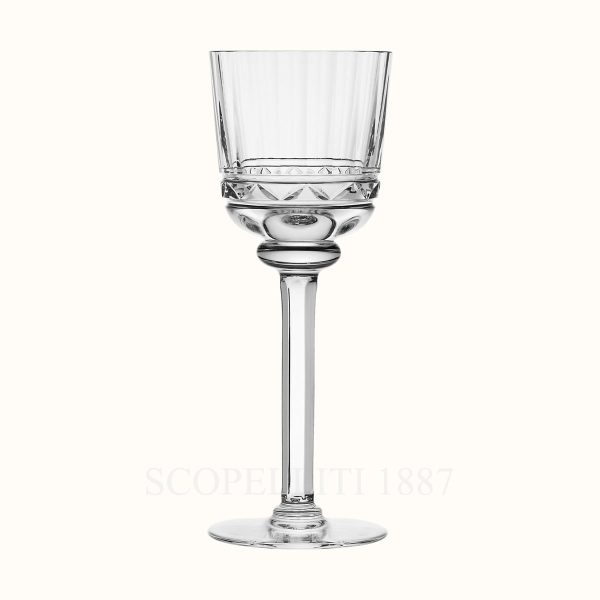
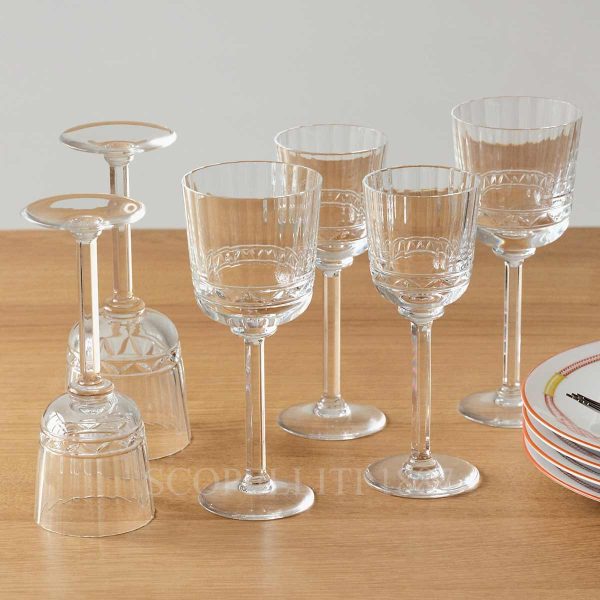
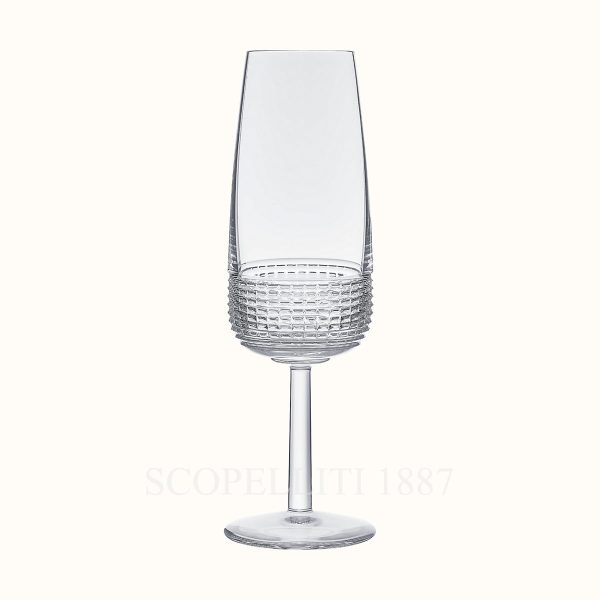
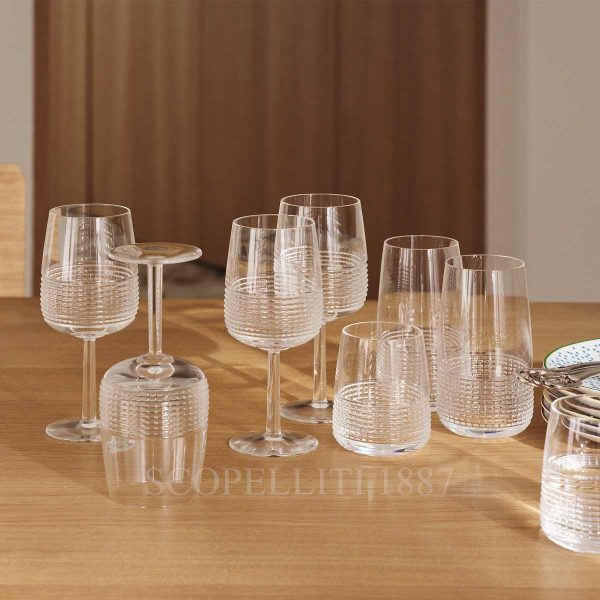
Crystal glassware divides into a few clear families, and a considered table usually draws on several. Stemware covers wine glasses, champagne flutes and coupes, and water goblets – the pieces that do the most to set the tone of a table. The bowl shape is not decoration alone; it directs aroma and flow, which is why serious wine lovers match the glass to the grape. Explore the full range of luxury stemware to see how form follows function.
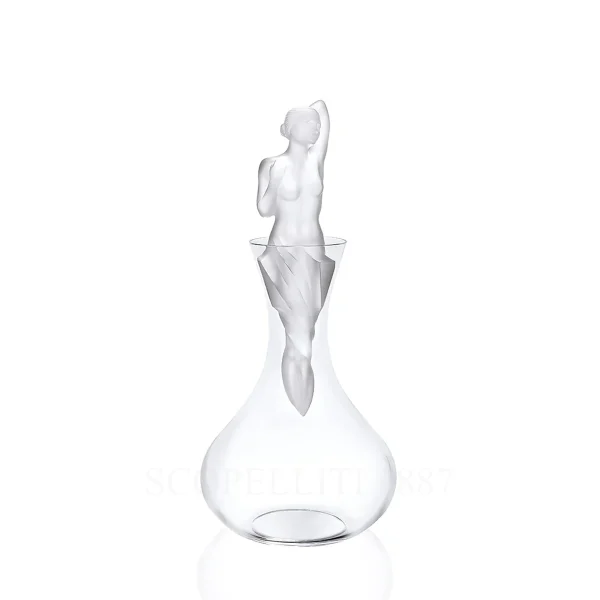
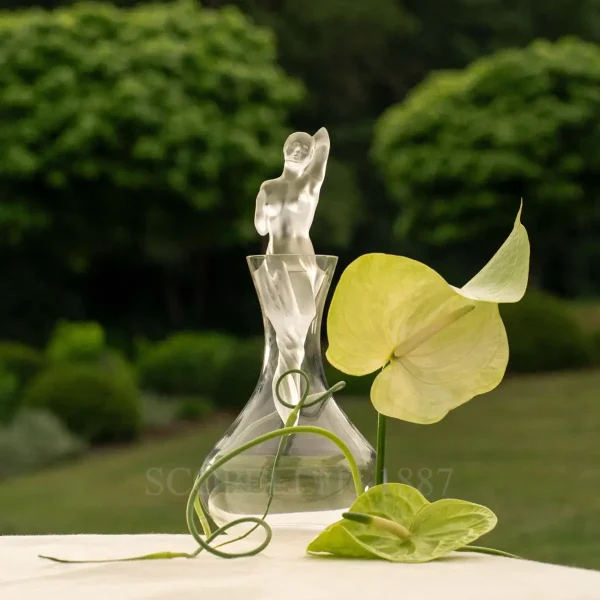
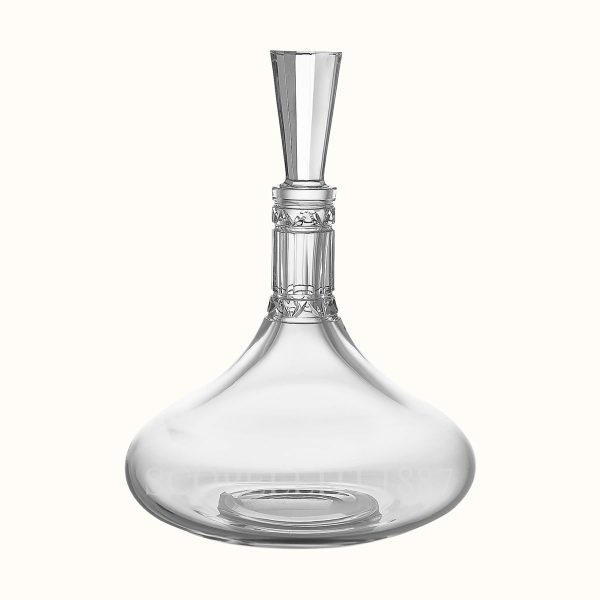
Tumblers and barware – whisky glasses, highballs and old-fashioned tumblers – bring weight and presence to spirits, and a beautifully cut base looks magnificent with an amber pour. Decanters and pitchers are the sculptural heart of the collection, equal parts function and centrepiece, letting wine breathe or spirits shine. Browse decanters and pitchers for pieces that work as hard as they impress.
Caring for crystal so it lasts generations
Crystal rewards a little attention. Hand washing is almost always the wise choice: use warm – never hot – water with a mild detergent, line the sink to cushion against knocks, and wash one piece at a time. Dry immediately with a soft, lint-free cloth to avoid water spots, holding the bowl rather than twisting the stem.
Store stemware upright rather than rim-down, since the rim is the most fragile part, and avoid sudden temperature changes that can stress the glass. Treated this way, fine crystal does not merely survive – it becomes an heirloom, passed from one table to the next with its brilliance intact. Is the extra care worth it? For pieces this beautiful, most owners find it part of the pleasure.
Choosing crystal as an investment and a gift
Few objects say more, more quietly, than a piece of fine crystal. It marks weddings, anniversaries and milestones precisely because it carries permanence and craft in equal measure. As an authorized retailer of the world’s most celebrated crystal houses – names such as Baccarat, Lalique, Saint-Louis, Daum and Swarovski – Scopelliti 1887 has guided collectors and gift-givers for more than 130 years. That experience matters when you are choosing something meant to last.
If you are building a collection, start with the pieces you will use most and let it grow. If you are buying a gift, a single signed decanter or a pair of beautifully cut tumblers makes an impression that endures long after the occasion.
Key points at a glance
Luxury crystal glassware is glass enriched with minerals that boost clarity, weight and brilliance; full lead crystal traditionally contains at least 24% lead oxide, while modern lead-free crystal achieves similar sparkle using barium, zinc or potassium. Judge quality with five tests: clarity, brilliance, a clear ringing resonance, substantial yet balanced weight, and precise hand-cutting. The main families are stemware, tumblers and barware, and decanters. Care is straightforward — hand wash in warm water, dry immediately with a soft cloth, and store stemware upright. Chosen well, crystal is both a daily pleasure and a lasting heirloom, which is what makes it such a meaningful gift.
Frequently asked questions about luxury crystal glassware
What is the difference between crystal and glass?
Crystal is glass enriched with minerals — historically lead oxide — that increase its refractive index, giving greater clarity, weight and brilliance, plus the characteristic ringing tone when tapped. Ordinary glass lacks these added minerals and appears less luminous and lighter in the hand.
How can I tell if crystal is high quality?
Check five things: water-clear clarity with no tint or bubbles, brilliant light refraction, a clear sustained ring when tapped, a substantial yet balanced weight, and precise, well-polished cutting. Hand-blown and hand-cut pieces show the finest craftsmanship.
Is lead-free crystal as good as lead crystal?
Yes. Modern lead-free crystal uses minerals such as barium, zinc or potassium to achieve comparable brilliance and resonance, while being well suited to everyday use and easier to care for. Quality depends on the maker’s formula and craftsmanship rather than lead content alone.
Can crystal glassware go in the dishwasher?
Hand washing is strongly recommended for fine crystal. Use warm — never hot — water with mild detergent, wash one piece at a time over a cushioned sink, and dry immediately with a soft, lint-free cloth. Store stemware upright to protect the delicate rim.
Start your crystal collection with confidence
Buying crystal well comes down to trusting your senses and trusting the maker. Look for clarity and brilliance, listen for the ring, feel the balance, and choose houses with a genuine pedigree. Do that and every piece earns its place at the table.
Explore the luxury crystal collection at Scopelliti 1887 – discover signed stemware, tumblers and decanters in our barware and crystal collection, or speak with our advisors for guidance tailored to your table.