The great brands of crystal are not simply manufacturers – they are houses with centuries of fire, sand and human skill behind every piece. Knowing who they are, where they come from and what each does best turns crystal from a mystery into a pleasure. This guide explains the fifteen finest crystal makers in the world, grouped by the traditions that shaped them, so you can recognise true pedigree wherever you see it.
First, a quick word on what unites them. Crystal is glass enriched with minerals that raise its clarity, weight and refractive brilliance, giving the material its sparkle and its singing tone (the defining property of lead and mineral crystal). What separates one great house from another is not chemistry but character: the cutting, the colour, the forms and the philosophy each brings to the same molten material. Museums such as The Corning Museum of Glass document just how deep these traditions run.
The French maisons: the pinnacle of luxury crystal
If crystal has a spiritual home, many would place it in the workshops of eastern France, where a cluster of houses set the global standard for prestige.
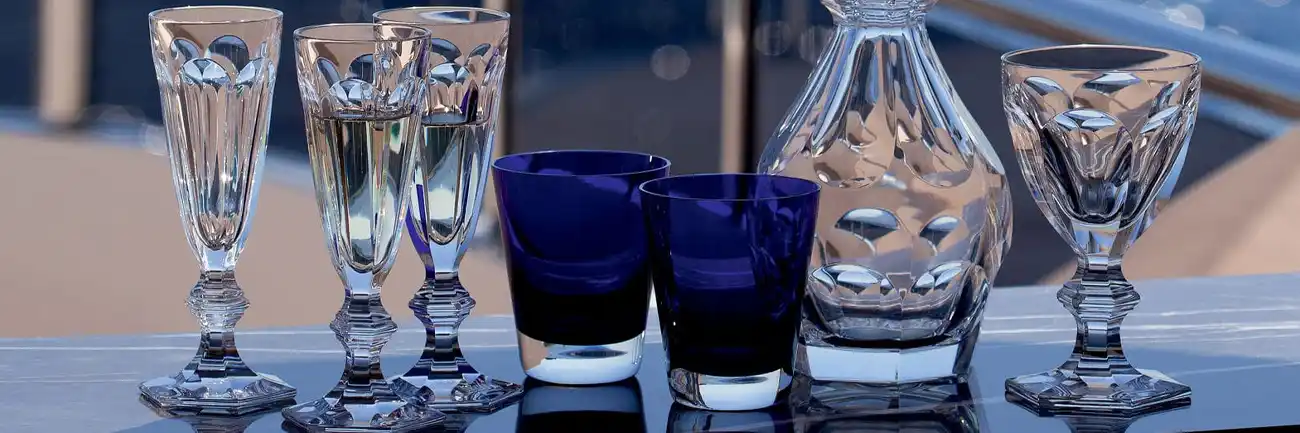
Baccarat, founded in 1764, is perhaps the most famous name in crystal anywhere. Its work is defined by flawless clarity, daring chandeliers and a confident, contemporary glamour that has crowned royal tables and grand hotels alike. Saint-Louis, older still, traces its glassmaking roots to 1586 and became France’s first producer of lead crystal in 1781; it is celebrated for its intricate paperweights, vivid colour overlays and exquisite filigree. Lalique, born of René Lalique’s genius, bridges crystal and sculpture, with frosted, satin-finished pieces – flora, fauna and the female form – that are as much art objects as tableware. Daum rounds out the French quartet with its mastery of pâte de verre, a demanding technique that yields luminous, jewel-toned crystal in extraordinary colours.
These four are the reason “French crystal” is shorthand for the very best. You can explore them directly through the Baccarat, Saint-Louis, Lalique and Daum collections.
Bohemia and the Czech tradition: where crystal was perfected
Long before France rose to prominence, the forests of Bohemia were already famous for glass. The region gave the world “Bohemian crystal,” renowned for its deep engraving, bold colour and brilliant cutting – and several of its houses remain benchmarks of the craft.
Moser, established in 1857, built its reputation on lead-free crystal of remarkable purity, vivid hand-applied colours and engraving so fine it became known as the “glass of kings.” The broader Bohemian crystal tradition, meanwhile, represents centuries of Czech mastery in cut and engraved glass, a heritage so influential that it effectively defined what most people picture when they imagine ornate crystal. The hallmark of this school is precision: deep, geometric cuts that throw light in every direction.
Austria: precision, science and sparkle
Austria contributes two very different but equally essential names. Swarovski, founded in 1895, revolutionised crystal by perfecting precision-cut crystal with an unmistakable, diamond-like fire, becoming a global icon of decorative and jewellery crystal. Riedel, by contrast, transformed the way we drink: its insight that the shape of a glass changes the perception of a wine reshaped stemware design worldwide, and its varietal-specific glasses are a fixture on serious tables. One pursues dazzle, the other pursues taste – and both are masters.
You will find Swarovski’s signature brilliance within our Swarovski collection, where crystal crosses freely between the table and the jewellery box.
Italy and Murano: glass as living art
Venetian glassmaking is a world of its own. On the island of Murano, techniques guarded for centuries produce work that is less about cut brilliance and more about colour, fluidity and sculptural daring. Venini, founded in 1921, stands at the summit of this tradition, collaborating with leading designers to create vases, lighting and objects of astonishing artistry. Murano glass as a whole – handblown, often richly coloured, frequently one-of-a-kind – is the artistic counterpoint to the disciplined cutting of the north. Discover Venini’s work in our Venini collection.
The wider world of fine crystal
Beyond these centres, a handful of houses complete the roll call of the world’s finest. Waterford, the celebrated Irish house, is famous for deeply cut, weighty crystal and its instantly recognisable patterns. Val Saint Lambert of Belgium has produced royal-quality crystal since 1826, known for its coloured overlay and stately forms. From Sweden, Orrefors and Kosta Boda brought a clean, modern Scandinavian sensibility to crystal, pairing technical brilliance with bold artistic design. And Lobmeyr of Vienna, with its impossibly thin muslin glass and historic chandeliers, remains a connoisseur’s favourite.
Together with the French, Bohemian, Austrian and Italian houses above, these names form the fifteen great traditions of crystal – each a distinct answer to the same ancient question of how to make sand shine.
The craft behind the brands: how fine crystal is made
Understanding how crystal is made explains why these houses command such respect. It begins with a molten batch of silica enriched with minerals, heated in furnaces to extraordinary temperatures until the glass flows like honey. A master gathers it on a blowpipe and shapes each piece by breath and hand, or pours it into moulds for more complex forms – a discipline that takes years to learn and a lifetime to perfect.
The magic, though, happens in the finishing. After slow, careful cooling, the cutter takes over, grinding facets into the surface against rotating wheels with a precision measured in fractions of a millimetre. Engravers add their detail by hand, and a final polish brings the surface to its signature brilliance. A single elaborate piece can pass through many pairs of skilled hands, which is exactly why hand-cut crystal from a great house carries a value that machine production cannot replicate. When you hold one of these pieces, you are holding the sum of all that human skill.
How to choose between the great crystal houses
With so many storied names, how do you actually decide? Start with intent. If you want maximum prestige and a piece that will be recognised anywhere, the French maisons are unrivalled. If you love colour and artistry, look to Murano, Daum or the Bohemian engravers. If your priority is getting the very best from wine, varietal stemware from a specialist in glass shape is the smart choice. And if you are drawn to decorative sparkle, the precision-cut Austrian tradition is hard to beat.
Then consider use. A daily wine glass and a display centrepiece ask different things of crystal – one needs resilience and balance, the other can prioritise pure drama. Whatever you choose, the principles of quality stay constant: clarity without tint, brilliant refraction, a clear ringing tone, balanced weight and crisp, well-polished cutting. Browse the full luxury brands directory to see these houses side by side.
Key points at a glance
The finest brands of crystal cluster around a few great traditions. France is home to the most prestigious maisons – Baccarat, Saint-Louis, Lalique and Daum – known respectively for flawless clarity, intricate colour and filigree, sculptural frosted crystal, and luminous pâte de verre. Bohemia and the Czech lands perfected deep cutting and engraving, with Moser as a standout. Austria gave us Swarovski’s precision sparkle and Riedel’s wine-shaping stemware. Italy’s Murano, led by Venini, treats glass as colourful living art. Completing the world’s elite are Waterford (Ireland), Val Saint Lambert (Belgium), Orrefors and Kosta Boda (Sweden) and Lobmeyr (Austria). Choose by intent – prestige, colour, wine performance or decorative sparkle – and judge every piece on clarity, brilliance, resonance, weight and cutting.
Frequently asked questions about brands of crystal
Which is the most prestigious brand of crystal?
Baccarat, founded in France in 1764, is widely regarded as the most prestigious name in crystal, celebrated for flawless clarity and grand chandeliers. The other great French maisons – Saint-Louis, Lalique and Daum – share the very top tier of luxury crystal.
What is Bohemian crystal?
Bohemian crystal refers to the centuries-old glassmaking tradition of the Czech lands, famous for deep cutting, fine engraving and bold colour. It was so influential that it helped define what most people picture as ornate, brilliant crystal.
What is the difference between French and Italian crystal?
French crystal, from houses such as Baccarat and Saint-Louis, emphasises flawless clarity and precise cutting. Italian glass from Murano, led by Venini, prioritises colour, fluid form and sculptural artistry, with handblown pieces that are often unique works of art.
How do I choose the right crystal brand for me?
Choose by intent: French maisons for maximum prestige, Murano and Daum for colour and artistry, specialist varietal stemware for wine, and the Austrian tradition for decorative sparkle. Then judge each piece on clarity, brilliance, resonance, weight and the precision of its cutting.
Explore the world’s finest crystal in one place
Understanding the houses behind the craft is what turns a purchase into a collection. Each of these names carries a distinct heritage, and recognising it lets you choose with real confidence – for your own table or as a gift that will be treasured.
Discover the great crystal maisons at Scopelliti 1887 – an authorized retailer for more than 130 years. Browse the houses in our luxury brands collection, or speak with our advisors to find the piece that is right for you.