
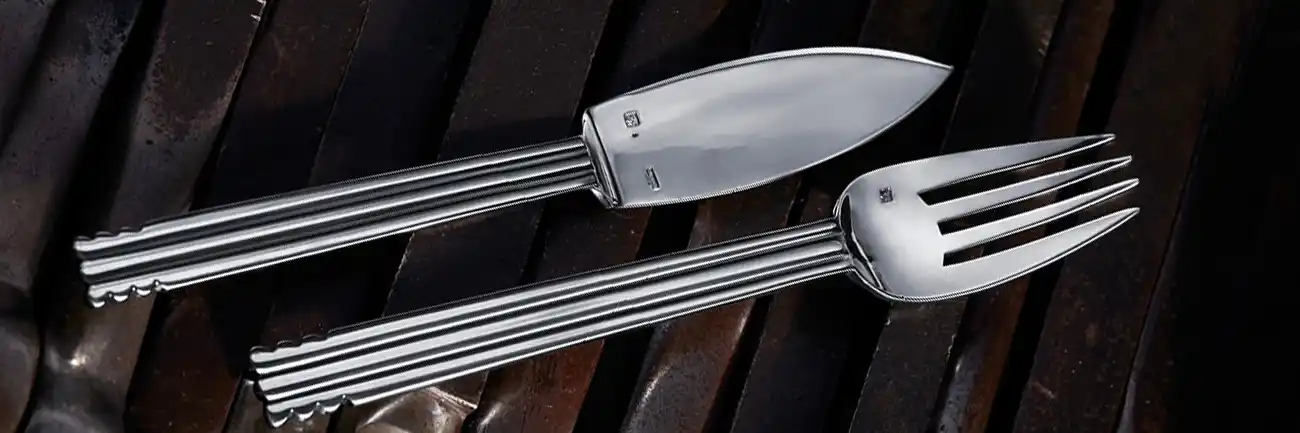
Sterling silver flatware sets occupy a place that no other tableware can claim: they are at once a daily pleasure, a family heirloom and a quiet store of value. For the collector, they are also a subject worth understanding properly, because the differences between sets – in silver content, hallmarking, pattern and craftsmanship – are real and lasting. This guide covers everything you need to buy, build and care for a sterling silver service with confidence.
What “sterling silver” really means
The term is precise, not decorative. Sterling silver is an alloy of 92.5% pure silver and 7.5% other metals, usually copper, a ratio chosen because pure silver is too soft for daily use while the small addition of copper gives strength without dulling the lustre (the long-established 925 standard). That “925” figure is why genuine sterling is so often stamped with the number, and why it feels substantial in a way that lighter pieces never do.
This matters because sterling is solid silver throughout. Unlike plated pieces, it cannot wear through to a base metal, which is precisely what allows a well-kept set to be passed down for generations and to retain intrinsic worth along the way.
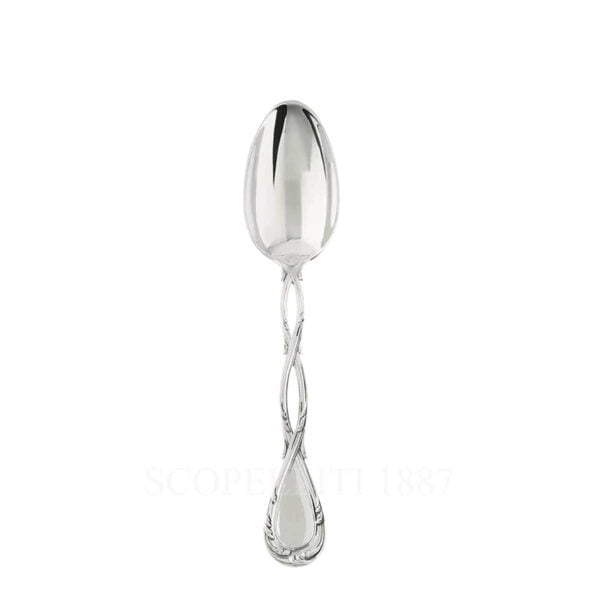
Sterling vs silver-plate vs stainless steel
Understanding the alternatives clarifies what you are paying for. Silver-plated flatware bonds a thin layer of silver over a base metal; it offers the look of silver and, from the finest houses, can be beautifully made – but the surface layer can eventually wear with heavy use. Stainless steel, often graded 18/10, is durable, dishwasher-friendly and ideal for everyday dining, though it lacks the warmth and prestige of precious metal.
Sterling sits at the summit. It combines the deepest lustre, the greatest heft and the only true heirloom credentials, which is why collectors and fine households reserve it for the table that matters. If you are weighing your options across finishes, our broader luxury cutlery sets collection lets you compare them in one place.
How to read hallmarks like a collector
Hallmarks are the language of silver, and learning to read them is half the pleasure of collecting. A genuine sterling piece typically carries marks indicating its silver standard (such as 925 or a national sterling symbol), the maker’s mark identifying the silversmith or house, and – depending on origin – an assay office mark and a date letter showing when it was tested.
These small stamps tell you authenticity, origin and often age at a glance. When you are examining a set, look for crisp, complete marks rather than worn or ambiguous ones, and treat the maker’s mark of a renowned house as the reassurance it is. It is the difference between buying an object and buying a provenance.
What belongs in a sterling silver flatware set
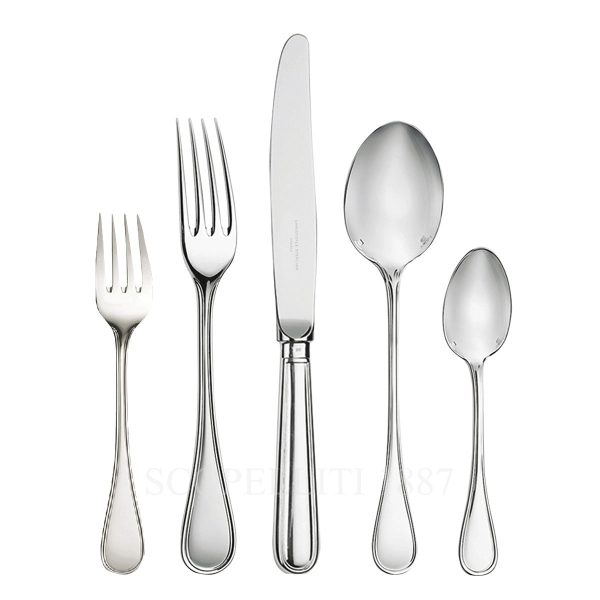
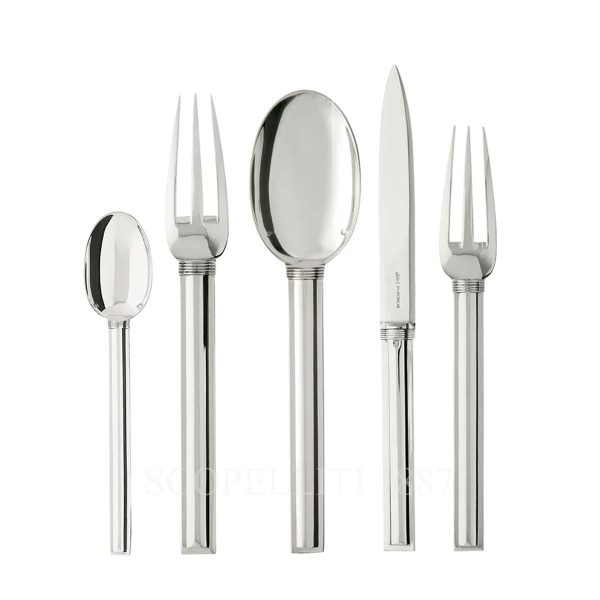
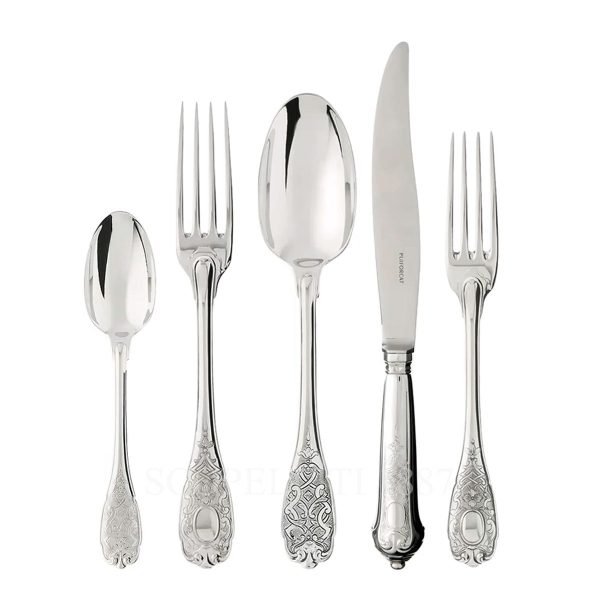
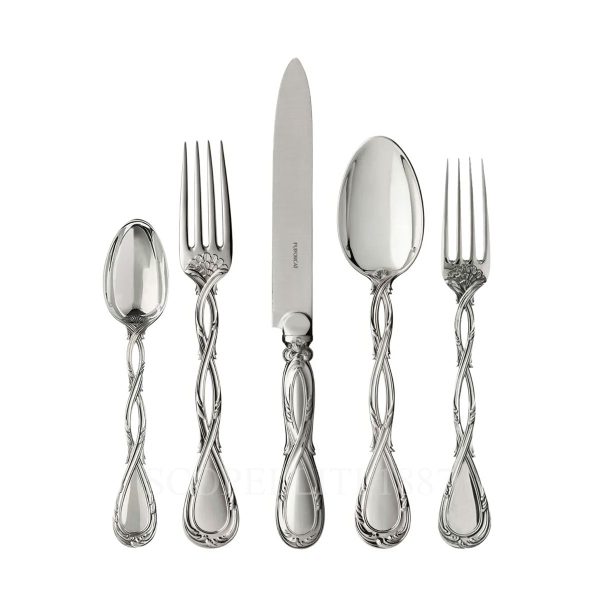
A classic place setting is usually built in fives: a dinner fork, a dinner knife, a soup or dessert spoon, a salad or fish fork, and a teaspoon. Sets are then sold by the number of place settings – commonly for six, eight or twelve guests – so the household can scale to the way it entertains.
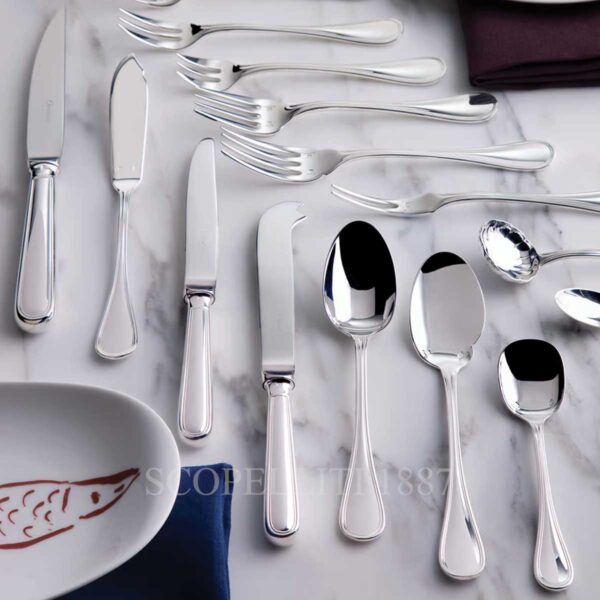
Beyond the core, a full service grows to include serving pieces: serving spoons and forks, a ladle, a cake server, sugar tongs and specialist items for fish or dessert. Many collectors begin with settings for their everyday number of guests and add serving and speciality pieces over time, which is a sensible and traditional way to build a service without rushing it. Browse complete services in the sterling silver flatware sets collection.
Caring for sterling silver: tarnish, cleaning and storage
Sterling silver tarnishes – that is simply the metal reacting with sulphur in the air, and it is entirely reversible. The good news is that regular use actually helps, since gentle handling and washing keep tarnish at bay. After meals, hand wash with warm water and a mild, non-citrus detergent, then dry promptly with a soft cloth; avoid leaving pieces to soak or letting them touch stainless steel in the sink, which can cause spotting.
When polishing is needed, use a dedicated silver polish and a soft cloth, working gently along the piece. For storage, anti-tarnish cloth rolls or lined chests slow the process dramatically and protect against scratches. Treated this way, a sterling service will look magnificent for decades – and improve, many would argue, with the soft patina that only years of use can bring.
An heirloom and a gift that endures
There is a reason sterling silver remains a defining wedding and milestone gift. It is one of the few presents that genuinely becomes part of a family’s story, brought out for the occasions that matter and eventually handed on. As an authorized retailer of the most respected silver houses – names such as Christofle, Ercuis and Puiforcat – Scopelliti 1887 has helped families choose and grow their services for well over a century. That continuity is exactly what a collector wants behind a purchase of this importance.
Key points at a glance
Sterling silver flatware is solid silver throughout – an alloy of 92.5% silver and 7.5% copper, marked “925” – which is why it carries heirloom status and lasting value that plated pieces cannot match. Silver-plate offers the look at a lighter commitment, while 18/10 stainless steel suits everyday use. Learn to read hallmarks for silver standard, maker and date, and look for crisp, complete marks. A place setting is typically five pieces, sold for six, eight or twelve guests, with serving and speciality pieces added over time. Care is simple: hand wash and dry promptly, polish gently when needed, and store in anti-tarnish rolls or a lined chest. Well kept, a sterling service lasts for generations, which is what makes it such a meaningful wedding and milestone gift.
Frequently asked questions about sterling silver flatware sets
What is the difference between sterling silver and silver-plated flatware?
Sterling silver is solid silver throughout – 92.5% pure silver alloyed with copper – so it never wears through and retains intrinsic value. Silver-plated flatware has a thin silver layer over a base metal, offering the look of silver but with a surface that can wear over many years of heavy use.
How can I tell if flatware is real sterling silver?
Look for hallmarks. Genuine sterling is usually stamped “925” or with a recognised national sterling mark, alongside a maker’s mark and, in many countries, assay and date marks. Crisp, complete hallmarks and a reputable maker’s mark are the clearest signs of authenticity.
How many pieces are in a sterling silver flatware set?
A standard place setting has five pieces: a dinner fork, dinner knife, soup or dessert spoon, salad or fish fork, and teaspoon. Sets are sold for six, eight or twelve guests, and a full service can be expanded with serving and speciality pieces.
How do you stop sterling silver from tarnishing?
Use it regularly, hand wash with warm water and a mild non-citrus detergent, and dry promptly with a soft cloth. Store pieces in anti-tarnish cloth rolls or a lined chest, and keep them away from contact with stainless steel, which can cause spotting.
Build a service worth passing on
A sterling silver flatware set is a decision you make once and benefit from for a lifetime. Understand the silver standard, read the hallmarks, choose a pattern you love and a maker you trust, and care for it simply – that is the whole art of collecting.
Explore sterling silver services at Scopelliti 1887 – discover the full sterling silver flatware sets collection, or speak with our advisors for help choosing a pattern and building your service over time.