
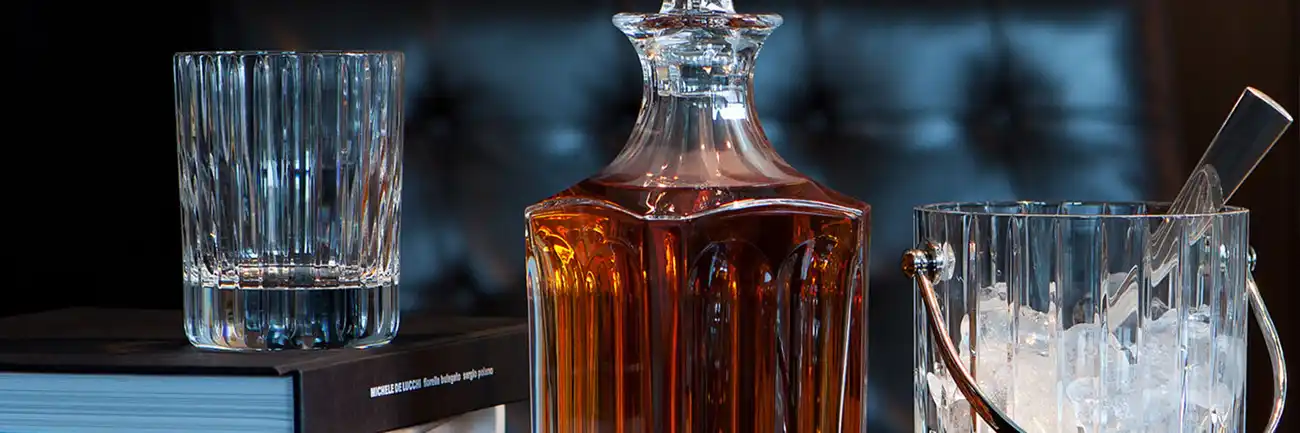
Crystal whisky glasses divide opinion more than any other piece of barware, and the argument is worth understanding before you buy. On one side sits the heavy cut-crystal tumbler, the glass of the study and the leather armchair. On the other, the tulip-shaped nosing glass that every distillery tasting room now uses. Both are right — for different whiskies, and different evenings. Here is how to choose, and why crystal in particular flatters a good dram.
Why crystal suits whisky so well
Whisky is the one spirit that is genuinely improved by the glass being beautiful — because so much of the pleasure is in looking at it. A well-cut crystal tumbler takes an amber liquid and turns it into a light show: the facets catch the fire, the lamp, the last of the evening, and throw them back through the spirit. Nothing plain glass does comes close, and the reason is simply the mineral content that gives crystal its refractive brilliance (the physics behind the sparkle).
Then there is weight. A crystal tumbler has heft, and heft slows you down — the glass sits in the hand with a seriousness that suits a spirit meant to be considered rather than drunk. Clarity matters too: whisky’s colour tells you something about its cask and its age, and you want to see it honestly rather than through a faint green cast. The full framework for judging crystal is set out in our guide to luxury crystal glassware.
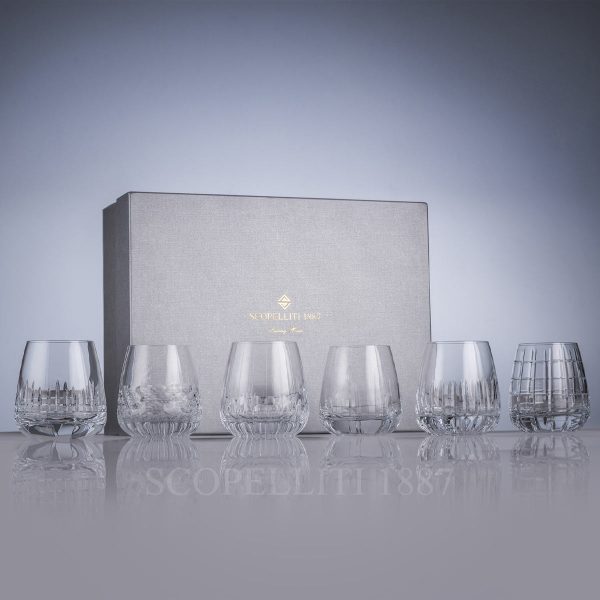
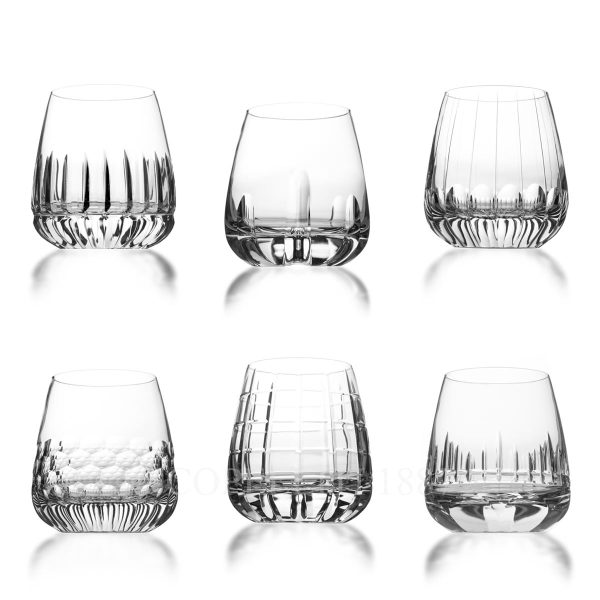
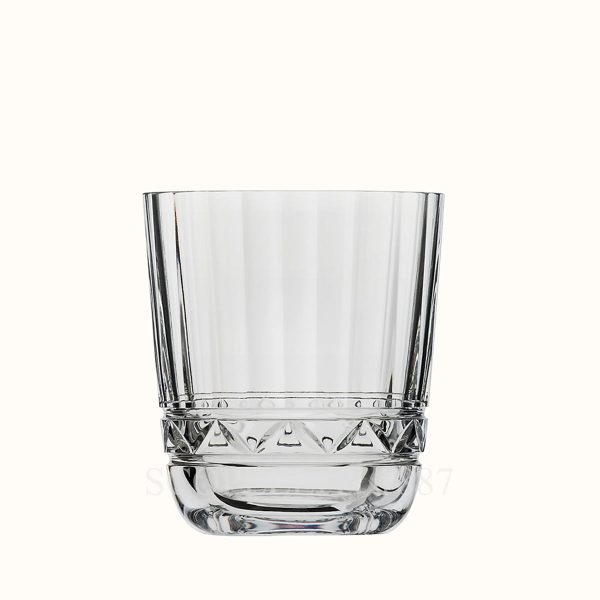
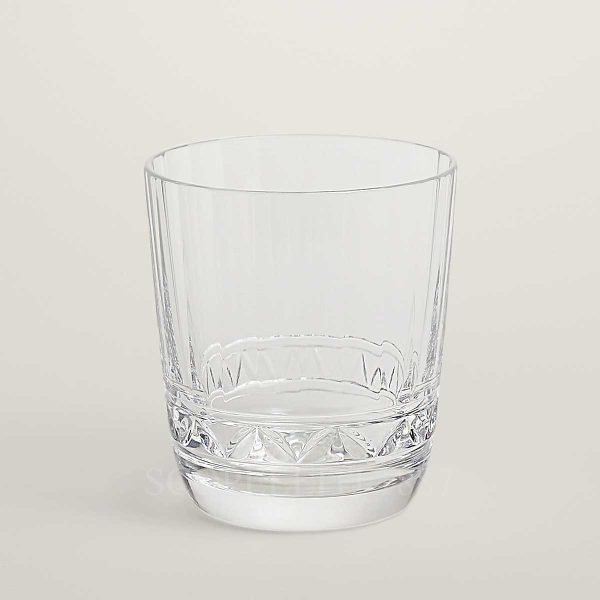
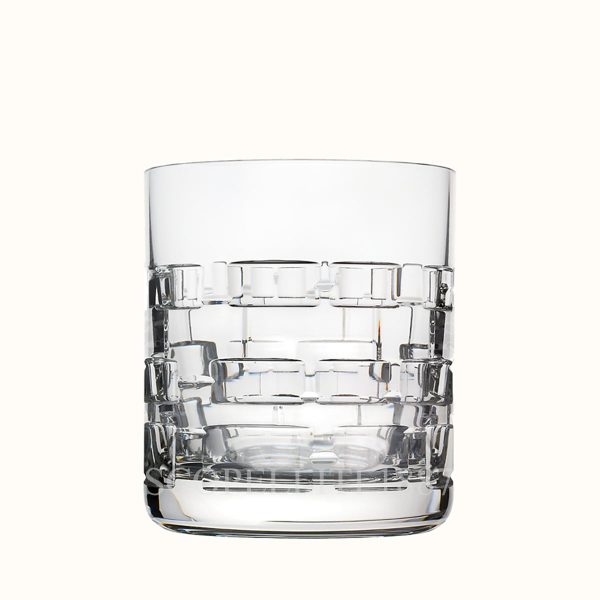
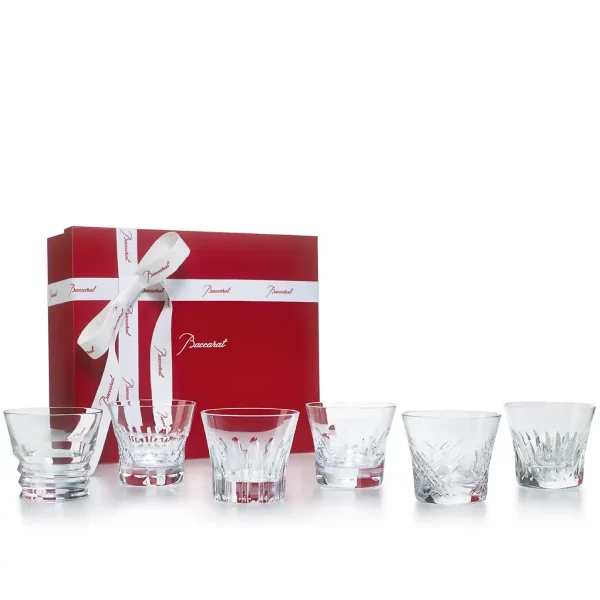
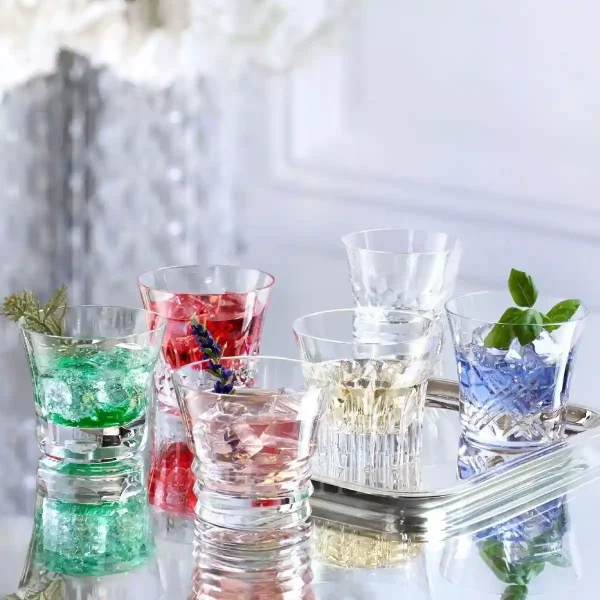
Tumbler versus nosing glass: the real difference
The tumbler — the old-fashioned, the rocks glass — is broad, straight-sided and heavy. That wide opening lets alcohol vapour disperse freely, which is exactly why it works: it takes the sharp ethanol edge off a robust whisky and makes for comfortable, sociable drinking. It also accommodates ice or a large sphere without crowding, and it feels magnificent in the hand. What it does not do is concentrate aroma.
The nosing glass does the opposite. Its tulip shape — a generous bowl narrowing to a smaller rim — gathers the aromatics and funnels them directly to your nose, which is where the great majority of whisky’s character actually lives. Taste a complex single malt from a tumbler and then from a nosing glass and the difference is close to embarrassing: the same spirit reveals two or three layers you simply could not find in the wider glass.
So which do you want? Be honest about the occasion. If you are assessing a special bottle, the nosing glass wins on merit and it is not close. If you are pouring a good whisky over ice while talking to friends, the crystal tumbler is the better companion — and there is nothing unserious about that. Most people who care end up owning both, and use them for exactly these two purposes.
What to look for in a crystal tumbler
Start with the base. A thick, weighted base is not decoration: it lowers the centre of gravity so the glass sits planted rather than skittish, it takes the impact when someone sets it down with feeling, and it acts as a lens for the cutting above it. This is the single feature that most separates a fine tumbler from an ordinary one.
Then the cut. Look for crisp, symmetrical facets with cleanly polished edges — hand-cut work has a precision and a depth that machine pressing never achieves, and it is what makes the light behave. Check the rim is smooth and comfortable against the lip. And weigh the glass in your hand: it should feel substantial but balanced, not clumsy. If it feels like a brick, the maker has confused weight with quality.
Finally, capacity. A tumbler that comfortably takes a measure plus a large ice cube or sphere without reaching the brim is the practical size. Compare the options in our whisky glasses and tumblers collections.
Serving a dram properly
Pour a modest measure — a whisky glass filled halfway is a whisky glass being misused. Then consider water. A few drops genuinely open up a cask-strength or high-proof whisky, breaking the alcohol’s grip and releasing aromas that were bound up in it; this is not dilution for the timid, it is standard practice among distillers themselves.
Ice is a matter of taste, and anyone who tells you otherwise is posturing. It does mute aroma and tighten flavour — that is chemistry — but if you enjoy your whisky cold, enjoy it cold. One concession worth making: use a single large cube or sphere rather than several small ones, since less surface area means slower melting and less watering-down. And let the glass rest a minute after pouring; the sharpest vapour blows off and the spirit settles.
The tray, and the care
A set of tumblers matched to a decanter in the same pattern is the classic composition, and it still looks better than anything assembled piecemeal — our guide to the crystal decanter covers how to choose the centrepiece, including the one thing to know about storing spirits in lead crystal.
Care is simple and non-negotiable. Hand wash in warm — never hot — water with a mild detergent, one glass at a time. Dry immediately with a soft, lint-free cloth. Keep fine crystal out of the dishwasher entirely, where heat and harsh detergent will cloud the surface permanently and no amount of polishing will bring it back. Do that much and a set bought today will still be catching the light in forty years — which, for a glass that holds something aged for decades, seems only fair.
Key points at a glance
Crystal suits whisky because its refractive brilliance turns an amber spirit into a light show, its weight slows the drinking, and its clarity shows the true colour of the cask. The two main shapes serve different ends: the broad, heavy tumbler disperses alcohol vapour, takes ice comfortably and is ideal for sociable drinking, while the tulip-shaped nosing glass concentrates aromatics at the rim and is markedly better for assessing a complex malt.
Choose a tumbler with a thick weighted base, crisp symmetrical hand-cutting, a smooth rim and balanced heft. Pour a modest measure, add a few drops of water to open a high-proof whisky, and prefer one large ice cube to several small ones. Hand wash in warm water, dry immediately, and never use a dishwasher.
Frequently asked questions about crystal whisky glasses
What is the best glass for drinking whisky?
It depends on the purpose. A tulip-shaped nosing glass concentrates aroma at the rim and is best for tasting a complex whisky. A broad crystal tumbler disperses alcohol vapour, holds ice comfortably and suits relaxed, sociable drinking. Many enthusiasts own both.
Why do whisky glasses have a heavy base?
A thick base lowers the centre of gravity so the glass sits securely, absorbs the impact of being set down firmly, and acts as a lens that amplifies the cutting above it — making the whisky’s colour glow. It is a mark of a well-made tumbler rather than mere decoration.
Should you add water or ice to whisky?
A few drops of water genuinely open up cask-strength and high-proof whisky, releasing bound aromas — distillers do it routinely. Ice is a matter of personal taste; it mutes aroma, so if you use it, prefer a single large cube or sphere, which melts more slowly and dilutes less.
Can crystal whisky glasses go in the dishwasher?
No. Dishwasher heat and harsh detergents cloud fine crystal permanently and the damage cannot be reversed. Hand wash in warm — never hot — water with a mild detergent, one glass at a time, and dry immediately with a soft, lint-free cloth.
Pour something worth pausing over
The right glass will not improve a poor whisky, but it will let a good one tell you everything it knows. Keep a nosing glass for the bottles that deserve attention and a fine cut tumbler for the evenings that deserve company — and you are covered for both.
Discover crystal whisky glasses at Scopelliti 1887 — an authorized retailer of the world’s leading crystal houses for more than 130 years. Explore our whisky glasses collection, or speak with our advisors to complete your bar.