

Meissen porcelain begins with one of the strangest stories in European craft: a young alchemist locked in a castle and ordered to make gold, who instead made something rarer. Three centuries later the crossed swords on the underside of a Meissen plate remain the most recognised mark in porcelain — and the reason collectors turn every piece over before they turn it right way up. Here is what that mark means, and what to know before you buy.
The alchemist who invented European porcelain
For centuries, Europe could not make porcelain. Chinese wares arrived by ship and sold for sums that made monarchs jealous, and the formula — true hard-paste porcelain, white, translucent, ringing — remained a mystery no European workshop could crack. It became known as white gold, and the obsession was genuine.
Augustus the Strong, Elector of Saxony, had that obsession worse than most. He set the alchemist Johann Friedrich Böttger to work under close guard, expecting gold; what emerged instead, around 1708, was the first European hard-paste porcelain. The manufactory was founded at Meissen in 1710, making it the first porcelain house on the continent and the ancestor of every European maison that followed (the origins of the manufactory). Every fine porcelain service in Europe traces its lineage, one way or another, back to that castle.
The crossed swords: porcelain’s most famous mark
Success brought imitators almost immediately, and Meissen’s answer was to sign its work. The crossed swords — drawn from the arms of Saxony — were adopted in 1722, making them one of the oldest trademarks still in use anywhere in the world. They are hand-painted in underglaze blue on the base of each piece, and they are the first thing any collector looks for.
The detail matters, because the swords have changed subtly across three centuries — the angle of the blades, the length of the pommels, small additions and dots — and those variations let specialists date a piece with real precision. A crisp, confidently painted mark is a good sign; a hesitant or oddly proportioned one is a reason to ask questions. This is exactly why buying from an authorized retailer removes so much anxiety: provenance comes with the piece rather than as a puzzle to solve.
The patterns that made the name
Two creations tower over the rest.
The Blue Onion pattern — Zwiebelmuster — dates from around 1739 and is perhaps the most copied design in the history of tableware. The joke embedded in its name is that there is no onion in it at all: the motifs are stylised pomegranates and peaches, misread by European eyes unfamiliar with the Chinese originals that inspired them. It has been in continuous production ever since, which tells you everything about its appeal.
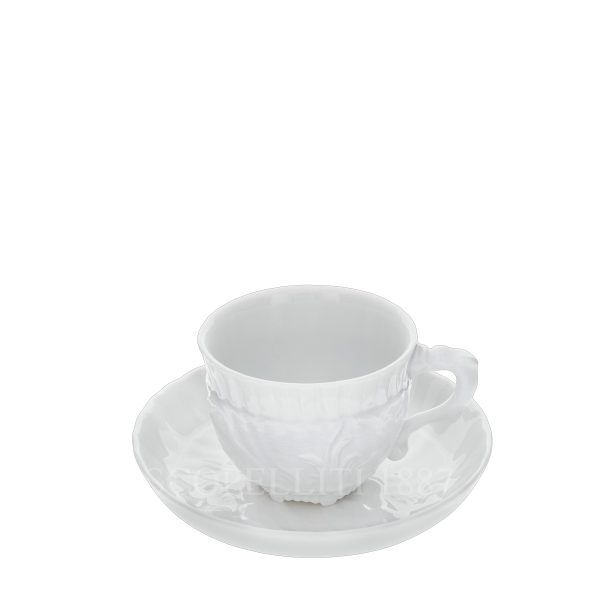
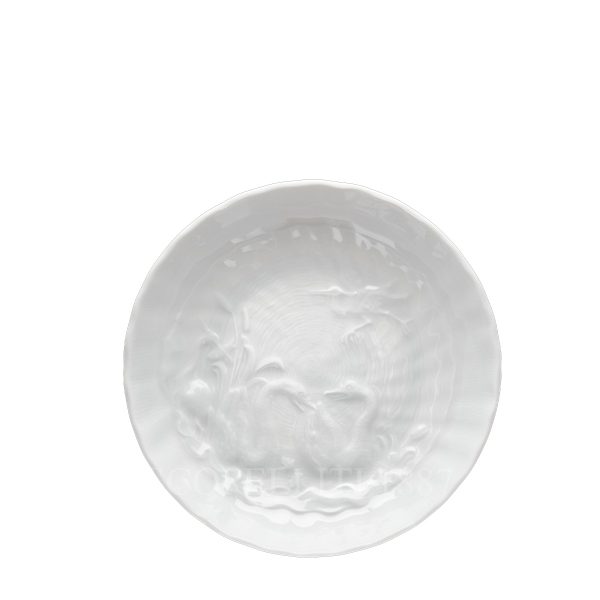
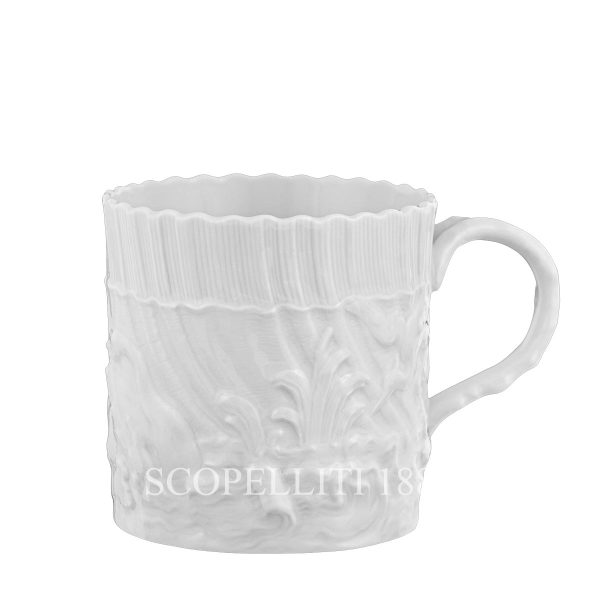
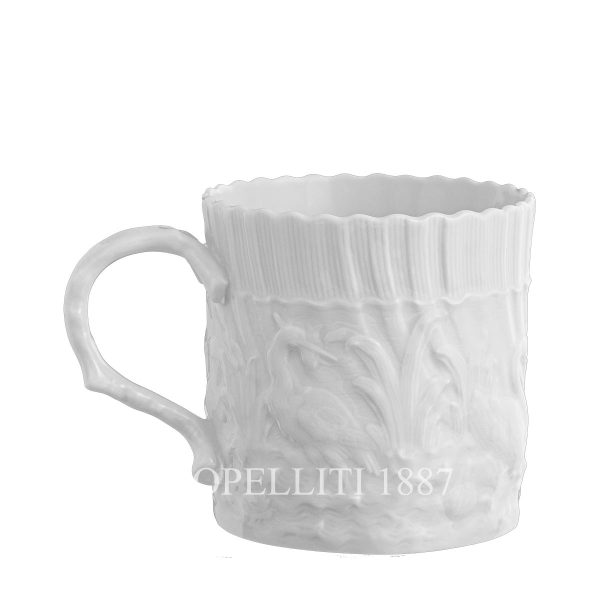
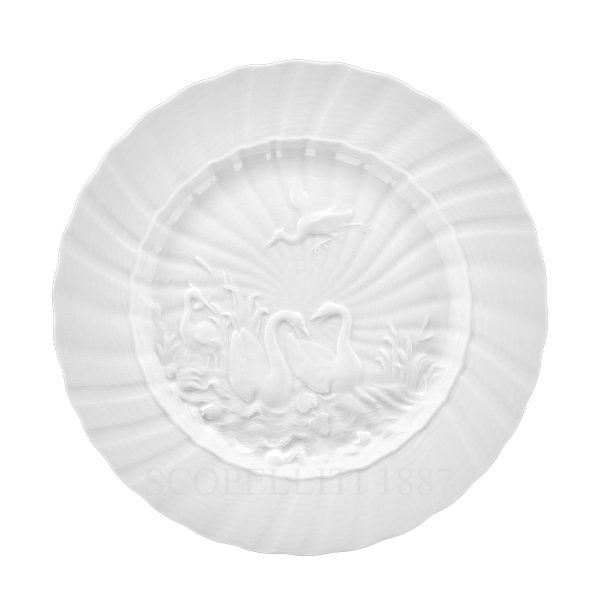
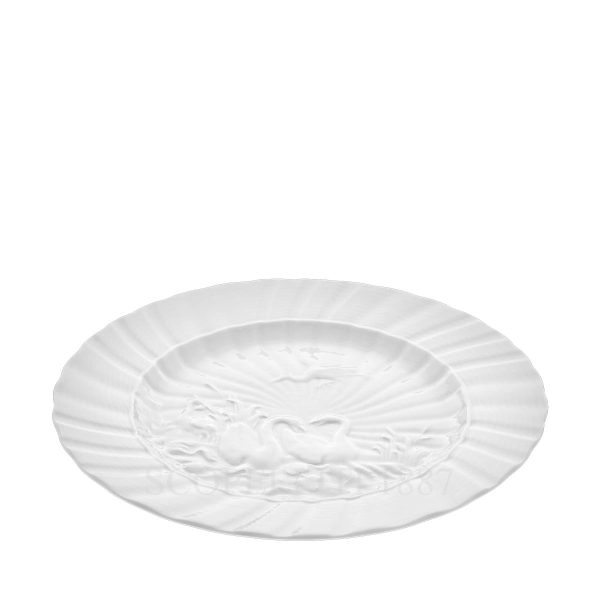
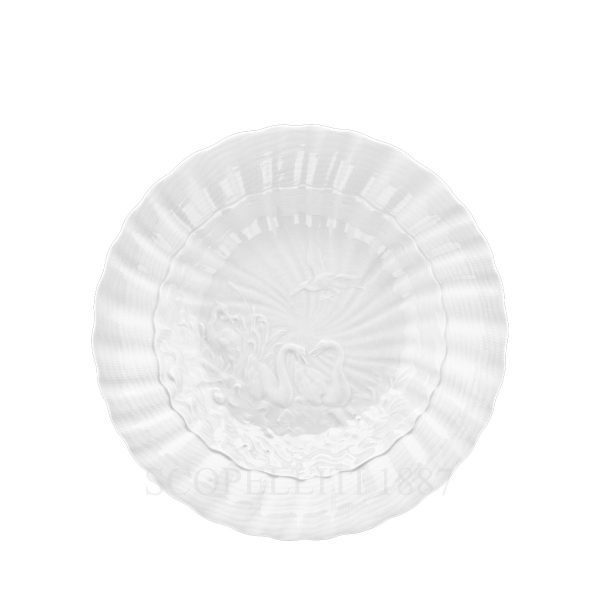
The Swan Service, modelled between 1737 and 1741, is the other landmark: a vast, sculptural service of some two thousand pieces created for Count Brühl, in which swans, shells, nereids and water seem to rise out of the porcelain itself. It is less a dinner service than an argument that porcelain could be sculpture. Alongside these sit the celebrated Meissen figures — commedia dell’arte characters, animals, courtly groups — hand-modelled and hand-painted to a standard that still sets the benchmark.

What makes Meissen worth the investment
Three things, and they compound. First, the handwork: pieces are still modelled and painted by hand, with painters trained for years before they are trusted with a service. That is not marketing language — it is the reason no two hand-painted pieces are quite identical. Second, the continuity: a house that has produced without interruption since 1710 holds its own archive, which means patterns can be matched and services extended across generations rather than orphaned when fashion moves on.
Third, collectability. Meissen has a deep, mature secondary market and a documented history, which gives it a stability that newer names simply cannot claim. None of that guarantees a return — no honest retailer would suggest otherwise — but it does mean you are buying into something with a floor beneath it. Where Meissen sits among the other great houses is set out in our guide to the finest nice dinnerware brands.
Buying and living with Meissen
Start with what you will use. A collector’s instinct says figures and display pieces; a host’s instinct says a service you will actually lay on the table. Both are valid, and there is a strong argument for the latter — porcelain this beautiful is wasted behind glass. If you are building a service, buy the settings for the number of guests you truly host and extend gradually.
Care is uncomplicated. Hand wash hand-painted and gilded pieces, since dishwasher detergents will eventually wear both the painting and the gold. Never microwave anything with a gilded rim. Stack with felt or paper separators, avoid dragging cutlery across the glaze, and keep pieces away from sudden temperature changes. How Meissen sits within a complete table — with the flatware, glass and linen around it — is covered in our guide to luxury tableware, and the current collection lives in our Meissen pages.
Key points at a glance
Meissen is Europe’s first porcelain manufactory, founded in 1710 in Saxony after the alchemist Johann Friedrich Böttger discovered hard-paste porcelain while under orders from Augustus the Strong to make gold. Its crossed swords mark, adopted in 1722 from the arms of Saxony, is one of the oldest trademarks in continuous use; small variations in the hand-painted swords allow specialists to date pieces.
The Blue Onion pattern of around 1739 — whose motifs are actually pomegranates and peaches, not onions — is among the most copied designs ever made, while the Swan Service of 1737–41 turned porcelain into sculpture. Meissen’s value rests on continuing handwork, an unbroken archive that lets services be extended, and a deep collectors’ market. Hand wash painted and gilded pieces, and never microwave gilding.
Frequently asked questions about Meissen porcelain
Why is Meissen porcelain so famous?
Meissen was the first manufactory in Europe to produce true hard-paste porcelain, founded in 1710 after the formula was discovered in Saxony. Every European porcelain house that followed descends from that breakthrough, and Meissen’s hand-modelled, hand-painted work has set the standard ever since.
What do the crossed swords on Meissen mean?
The crossed swords are Meissen’s trademark, taken from the arms of Saxony and adopted in 1722 to defend against imitators. Hand-painted in underglaze blue on the base of each piece, they are among the oldest trademarks still in use, and their subtle variations help date individual pieces.
What is the Blue Onion pattern?
Blue Onion, or Zwiebelmuster, is a Meissen design dating from around 1739 and one of the most copied patterns in tableware history. Despite the name it contains no onions — the motifs are stylised pomegranates and peaches drawn from Chinese originals and misinterpreted by European eyes.
Can Meissen porcelain be used every day?
Yes, with sensible care. Hand wash hand-painted and gilded pieces rather than using a dishwasher, never microwave gilded rims, stack with felt or paper separators, and avoid sudden temperature changes. Porcelain of this quality is made to be used, not only displayed.
Three centuries, still on the table
Few objects let you set three hundred years of history in front of a guest and then serve dinner on it. That is Meissen’s particular magic — a piece that is simultaneously a museum object and a plate. Turn it over, find the swords, and you are holding the beginning of European porcelain.
Discover Meissen at Scopelliti 1887 — an authorized retailer of the world’s most prestigious porcelain houses for more than 130 years. Explore the Meissen collection, or speak with our advisors about building or extending a service.