
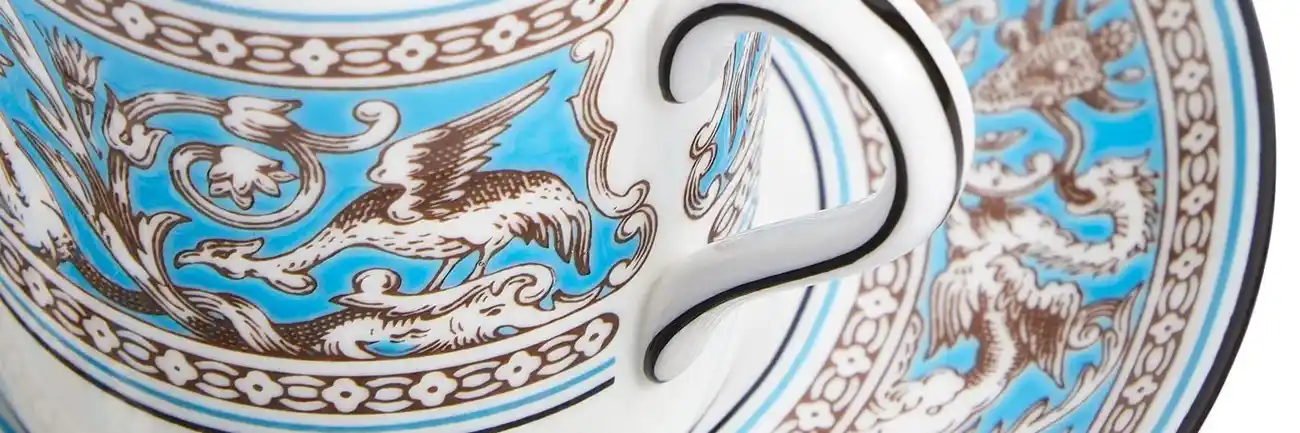
A bone china dinner set is the quiet showpiece of a well-run home: strong enough for Sunday lunch, refined enough for the dinner that matters, and beautiful enough that people notice without quite knowing why. It is also widely misunderstood — the name puts some people off, and the differences between bone china, porcelain and everything else are rarely explained properly. Here is what you actually need to know before you choose one.
What bone china really is
The name is literal, and the chemistry is the whole point. Bone china is a ceramic body made by adding bone ash to china clay and stone, developed in England in the eighteenth century. Traditionally it contains at least 30% bone ash, and the finest grades — sold as fine bone china — go higher still (the composition that defines the material).
What does that addition buy you? Three things at once, and they ordinarily contradict each other. It gives the body an exceptional whiteness with a faintly warm cast rather than a cold, clinical white. It produces a remarkable translucency — hold a plate to the light and you can see the shadow of your hand through it. And, counter-intuitively, it makes the ware stronger than standard porcelain, not weaker, which is why bone china can be thrown so much thinner and lighter while still surviving daily use.
That combination — delicate to look at, tougher than it appears — is the reason it has never been bettered for fine dining.
Bone china, porcelain, stoneware: the honest comparison
Bone china is the lightest and most translucent, with a warm white body and a delicate look that belies its strength. Hard-paste porcelain is fired at higher temperatures to a brilliant, cooler white; it is denser, heavier in the hand, and famously resonant when tapped — the classic European fine-dining standard, and the tradition that produced the great continental houses. Stoneware is opaque, chunky and robust: excellent for relaxed everyday dining, but not in this conversation.
Which should you choose? It is genuinely a question of feel rather than quality. If you want lightness, translucency and a softer white, bone china. If you want weight, a cooler brilliant white and that ringing tone, porcelain. Both are excellent, and the leading maisons work beautifully in each — as our guide to the finest nice dinnerware brands sets out in detail.
How to tell genuine bone china
Two tests, ten seconds, no expertise required.
The light test first: hold a plate up against a lamp or a window and place your hand behind it. Genuine bone china is translucent enough that you will see the silhouette of your fingers clearly through the body. Ordinary earthenware and stoneware show nothing at all. Then the sound test: tap the rim gently with a fingernail and listen for a clear, sustained ring rather than a flat thud.
After that, simply turn the plate over. The backstamp will tell you the maker and, usually, whether the piece is bone china or fine bone china. A crisp, confident mark from an established house is worth as much reassurance as any test.
What belongs in a dinner set
The building block is the five-piece place setting: dinner plate, side or salad plate, bread and butter plate, and a cup with its saucer — though compositions vary, and many modern sets substitute a bowl. Sets are then sold by the number of guests, most commonly for four, six, eight or twelve.
Beyond the settings, a complete service adds the serving pieces that turn a meal into an occasion: a platter or two, open vegetable bowls, a sauce boat, a teapot and coffee pot, a sugar bowl and creamer. Our advice, after a very long time watching people build services: buy the settings for the number of guests you genuinely host, then add serving pieces gradually. A complete, beautiful service for six will be used constantly; a sparse set for twelve will irritate you every time you lay the table. Explore the options in our 5 piece place settings collection.
Choosing a pattern you will still love in ten years
Here is where most people go wrong: they buy the pattern that dazzles in the shop rather than the one that flatters food. A busy, high-contrast design competes with what is on the plate; a white or subtly banded body makes every dish look better and never dates.
The elegant compromise is to build on a versatile core and layer personality on top — a plain or lightly decorated dinner service, with bolder patterned side plates, chargers or serving pieces for drama. That way the set adapts to Tuesday supper and Christmas lunch alike. Consider, too, whether the pattern will still speak to you when the fashion that produced it has passed; the great houses tend to win that test. How the whole table comes together — dinnerware, flatware, glass and linen — is covered in our guide to luxury tableware.
Living with bone china: care and the gold-rim rule
The single rule that saves the most heartbreak: anything with a gold or platinum rim must never go in the microwave, where the metal will spark, and is best kept out of the dishwasher too, since detergents wear the gilding away over time. Learn that once and you will never lose a rim.
Undecorated bone china is often dishwasher-safe on a gentle, low-temperature cycle — check the maker’s guidance — but hand washing is always the kinder option for a service you intend to keep. Stack plates with felt separators or paper between them to prevent scratching, avoid dragging cutlery across the glaze, and steer clear of sudden temperature shocks. None of it is demanding, and a well-kept service will outlast the dining room it was bought for.
Key points at a glance
Bone china is a ceramic body containing at least 30% bone ash, developed in eighteenth-century England, which gives it a warm white colour, remarkable translucency and — counter-intuitively — greater strength than standard porcelain, allowing thinner, lighter ware. Compared with hard-paste porcelain, it is lighter and softer-toned; porcelain is denser, cooler-white and more resonant.
Test authenticity by holding a plate to the light (you should see your hand through it) and tapping for a clear ring. A dinner set is built from five-piece place settings sold for four to twelve guests, expanded gradually with serving pieces. Choose a versatile pattern that flatters food and layer personality through side plates and chargers. Never microwave gold or platinum rims, and keep gilded pieces out of the dishwasher.
Frequently asked questions about bone china dinner sets
What is the difference between bone china and porcelain?
Bone china contains bone ash — traditionally at least 30% — which makes it lighter, more translucent, warmer in tone and actually stronger than standard porcelain. Hard-paste porcelain is fired hotter, producing a denser, cooler-white body with a heavier feel and a pronounced ring when tapped.
How can you tell if something is real bone china?
Hold a plate up to a light with your hand behind it — genuine bone china is translucent enough to show the silhouette of your fingers. Tap the rim gently and listen for a clear, sustained ring. The backstamp on the underside will confirm the maker and whether it is bone china or fine bone china.
Is bone china dishwasher safe?
Undecorated bone china is often dishwasher-safe on a gentle, low-temperature cycle — always check the maker’s guidance. Pieces with gold or platinum rims should be hand washed, as detergents wear the gilding, and must never go in the microwave because the metal will spark.
How many pieces should a dinner set have?
Start from the five-piece place setting — dinner plate, side plate, bread and butter plate, cup and saucer — and buy for the number of guests you genuinely host, typically six or eight. Add platters, vegetable bowls, a sauce boat and tea or coffee pots gradually.
Lay a table you will be proud of
Bone china rewards a little knowledge: understand what makes it special, test it with your own eyes, choose a pattern that serves the food rather than upstaging it, and treat the gilding with respect. Do that and one set will carry you through decades of dinners.
Discover fine dinner services at Scopelliti 1887 — an authorized retailer of the world’s leading porcelain houses for more than 130 years. Explore our luxury dinnerware collection, or speak with our advisors to choose a service worth keeping.