
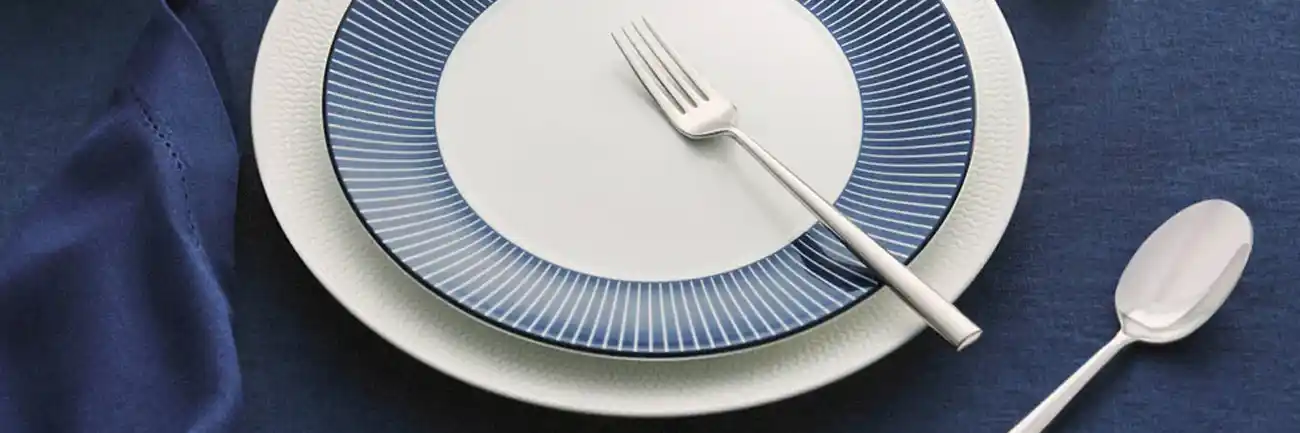
Wedgwood china is that rare thing: a name so familiar that most people stop seeing it. Say it and a pale blue vase with white figures appears in the mind’s eye — and then the thought usually stops there. Which is a shame, because behind that one famous image sits two and a half centuries of invention, a genuine claim to have modernised the whole industry, and some of the most quietly beautiful tableware ever made in England. Here is the house properly introduced.
The man who industrialised beauty
Josiah Wedgwood founded his pottery in Staffordshire in 1759, and he was not a conventional craftsman. He was an experimenter who kept meticulous records of thousands of trials, a businessman who effectively invented the showroom, the money-back guarantee and the illustrated catalogue, and a reformer with strong convictions — he produced the celebrated anti-slavery medallion of 1787 at his own expense, which tells you something about the man behind the marks (a history documented in detail).
His commercial masterstroke came early. Having perfected a refined cream-coloured earthenware, he secured the patronage of Queen Charlotte in 1765 and promptly renamed it Queen’s Ware — a piece of positioning so effective it is still taught today. Suddenly a practical, affordable ware carried royal association, and the middle classes could set a table that gestured at the court. It made his name and it changed what English pottery could be.
Jasperware: the image everyone knows
The pale blue with white classical figures in relief is Jasperware, developed around 1774 after thousands of documented experiments. It is an unglazed stoneware, coloured throughout the body rather than on the surface, with delicate white reliefs applied by hand — and although Wedgwood blue is the famous one, it was also made in sage green, lilac, black and yellow.
Its ambition was neoclassical: Josiah wanted to bring the ornament of antiquity onto English mantelpieces, and he pursued the idea to its logical extreme by spending years replicating the Roman Portland Vase in jasper — completed around 1790 and still regarded as one of the great technical feats in ceramics. Alongside it sits Black Basalt, the dense black stoneware introduced in the late 1760s, which looks startlingly modern today.
The bone china that belongs on the table
Here is where the house rewards a second look. Wedgwood produced bone china from 1812, stepped away, and returned to it in earnest in 1878 — and it is the fine bone china services, rather than the display pieces, that most people actually live with. Light, translucent and warm-toned, they cover a remarkable range: crisp white bodies with fine banding for those who want the food to speak, and exuberant florals and botanicals for those who want the table to.
The strength of an English bone china service is its versatility. It carries a Tuesday supper without feeling precious and a Christmas lunch without feeling underdressed — the definition of a sound investment in tableware. What bone china is, how to test it and what belongs in a service is covered fully in our guide to the bone china dinner set.
Reading the backstamp
Collectors turn pieces over first, and Wedgwood rewards the habit. The impressed or printed marks have evolved considerably across two and a half centuries — the wording, the presence or absence of “England” or “Made in England”, the addition of pattern names and numbers — and those changes give specialists a reliable way to place a piece in time.
Two practical notes. A crisp, well-formed mark is a good sign; a blurred or awkwardly proportioned one deserves scrutiny, since few names have been imitated more. And for a service you intend to build over years, buying from an authorized retailer matters more than any mark-reading skill: provenance, current production and the ability to add pieces later all come with the purchase rather than requiring detective work.
Choosing your Wedgwood
Decide first what role the pieces will play. For daily elegance, a white or lightly banded bone china service is close to unbeatable and will never date. For character, the botanical and floral patterns bring the English garden indoors — and they layer beautifully as side plates over a plain core. For decoration, Jasperware and Black Basalt work as objects in their own right, on a mantelpiece or a console, with no dining role at all.
Many households end up with all three, which is rather the point of a house with this range. Where Wedgwood stands among the other great names is set out in our guide to the finest nice dinnerware brands, and the current collection lives in our Wedgwood pages.
Caring for it
Plain, undecorated bone china is frequently dishwasher-safe on a gentle cycle — check the maker’s guidance for your pattern. Anything with a gold or platinum rim should be hand washed, because detergents wear gilding away over time, and must never go near a microwave, where metal will spark.
Jasperware needs a different touch entirely. Because it is unglazed, its matt surface can absorb marks, so keep it away from oils and strong colours, dust it gently, and clean it only with a barely damp cloth rather than soaking it. Stack plates with felt or paper separators, and a Wedgwood service will pass through a family intact — which, after all, is what Josiah was building for.
Key points at a glance
Wedgwood was founded in Staffordshire in 1759 by Josiah Wedgwood, an obsessive experimenter and pioneering businessman who secured Queen Charlotte’s patronage in 1765 and renamed his creamware Queen’s Ware. Jasperware — the famous pale blue unglazed stoneware with applied white classical reliefs, also made in green, lilac, black and yellow — arrived around 1774, followed by the celebrated Portland Vase replica around 1790;
Black Basalt dates from the late 1760s. The house produced bone china from 1812 and returned to it in 1878, and it is these light, translucent services that most people live with, ranging from crisp banded whites to exuberant florals. Read backstamps to date pieces, hand wash gilded ware, never microwave gilding, and clean unglazed Jasperware with only a barely damp cloth.
Frequently asked questions about Wedgwood china
What is Wedgwood best known for?
Wedgwood is best known for Jasperware, the unglazed stoneware with applied white classical reliefs, most famously in pale Wedgwood blue. The house is also celebrated for Queen’s Ware creamware, Black Basalt, and its fine bone china dinner services.
Is Wedgwood china bone china or porcelain?
Wedgwood makes several bodies. Its dinner services are largely fine bone china — light, translucent and warm-toned — while Jasperware and Black Basalt are unglazed stonewares, and Queen’s Ware is a refined cream-coloured earthenware.
How do you date Wedgwood by its backstamp?
Wedgwood’s marks have changed across its history — the wording, the presence of “England” or “Made in England”, and the addition of pattern names and numbers all help place a piece in time. Crisp, well-formed marks are a good sign, as the name has been widely imitated.
How should Jasperware be cleaned?
Because Jasperware is unglazed, its matt surface can absorb marks. Dust it gently and clean it with a barely damp cloth rather than soaking or washing it, and keep it away from oils and strongly coloured substances that could stain the body.
An English classic worth looking at twice
Wedgwood is far more than one blue vase. It is creamware that charmed a queen, a stoneware that put antiquity on the mantelpiece, and bone china services that quietly carry a family through decades of dinners. Choose the body that fits how you live, and the house does the rest.
Discover Wedgwood at Scopelliti 1887 — an authorized retailer of the great tableware houses for more than 130 years. Explore the Wedgwood collection, or speak with our advisors about choosing or extending a service.