

The martini glass is the most recognisable silhouette in the whole bar: a clean inverted cone perched on a slender stem, instantly readable even as a two-line icon on a neon sign. Yet choosing one for your own home is less obvious than it looks. Should the bowl be a sharp V or a softer coupe? Stemmed or stemless? Crystal or ordinary glass, and how large? After more than a century of advising hosts and collectors from our boutique in Reggio Calabria, we have learnt that the right glass changes how a drink tastes, how long it stays cold and how the table looks. This guide explains the shapes, the materials and the details that separate a beautiful set from one that simply fills a cupboard.
What defines a martini glass
At its simplest, a martini glass is a stemmed cocktail glass with a conical bowl that opens wide at the rim. Three parts do the work. The bowl holds a drink served “straight up”, meaning shaken or stirred with ice and then strained, so no ice remains to keep it cold. The stem keeps your fingers away from that bowl. The foot gives balance, and on a well made glass its diameter relates closely to the width of the rim so the glass does not feel top heavy.
Everything about the form follows from that one condition: a chilled drink with no ice in it. Your hand is the enemy, which is why the stem matters so much. The wide mouth lets the aromatics of gin, vermouth and a citrus twist reach the nose. And because the drink is short, usually a few ounces, the glass can stay relatively small and elegant rather than bulky.
If you are still building a general picture of which glass suits which drink, our overview of the different types of drinking glasses is a useful starting point. Here we stay focused on the cocktail glass that carries the martini’s name.
A short history of the V-shape
The cocktail glass existed long before the angular form we picture today. Nineteenth century versions tended to have rounded bowls on long stems, designed with the same aim of keeping a drink cold. The sharp V arrived with Art Deco. As The Irish Times recounts in its design history of the glass, the V-shaped cocktail glass made its debut at the 1925 International Exhibition of Modern Decorative and Industrial Arts in Paris, where stripped back, angular shapes were in vogue and the new glass was conceived as a sharper alternative to the shallow coupe then used for Champagne.
Its practical logic was noted from the start: the stem keeps the hand’s warmth away, the wide brim opens up the aromas, and a foot close in size to the rim keeps it stable. The glass is, in other words, a piece of modernist design that happens to be functional.
The glass had its excesses too. Over the decades, bowls grew larger and the drinks inside them sweeter, and by the 1990s oversized “tini” glasses had become a cliché. VinePair’s history of the martini glass notes that many contemporary bartenders turned instead to coupes or smaller glasses, partly for practical reasons and partly to distance themselves from that era. The good news for anyone buying today is that the classic proportions have returned, and that is exactly what a fine set should respect.
V-shape, coupe and other cocktail glass styles
Most people shopping for one are really choosing between a small family of shapes. Each serves the same drinks, yet each behaves differently in the hand.
The classic V-shape
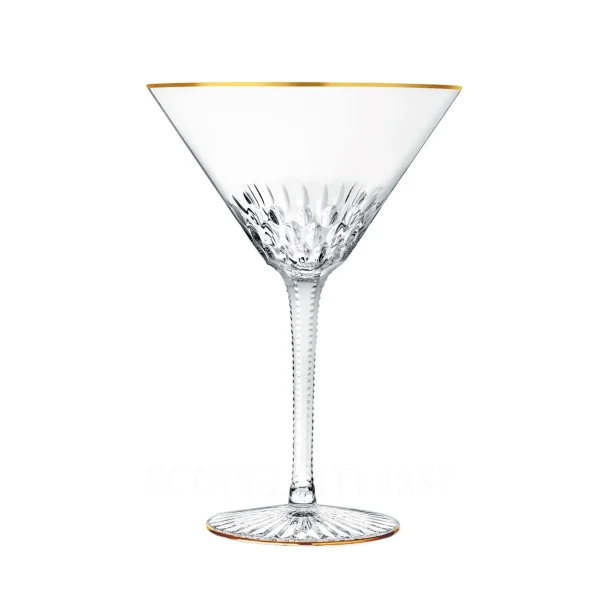
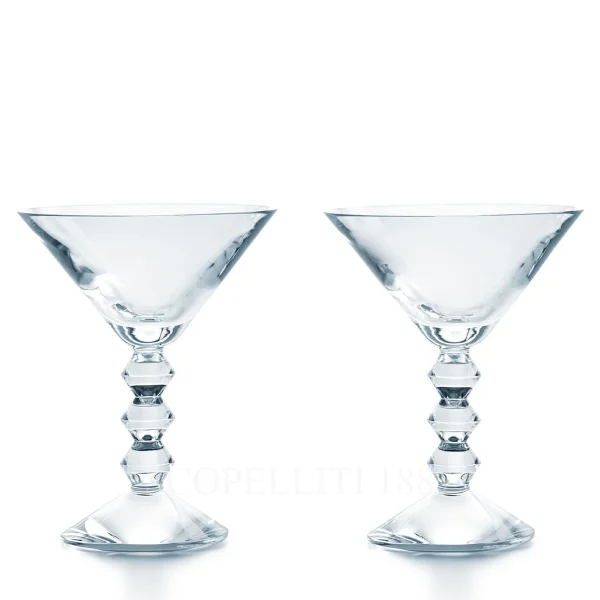
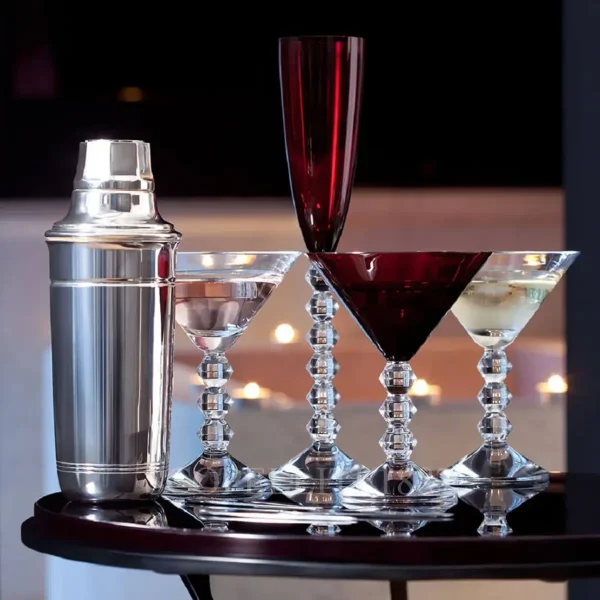
The straight-sided cone is the purest expression of the style. It looks architectural on a tray, shows off a clear, cold martini beautifully and frames a lemon twist or an olive on a pick. Its weakness is well known: the wide, shallow angle makes spills easy, particularly when the glass is filled close to the rim or carried across a room. A thin, fine rim and a moderate size go a long way to taming it.
The coupe
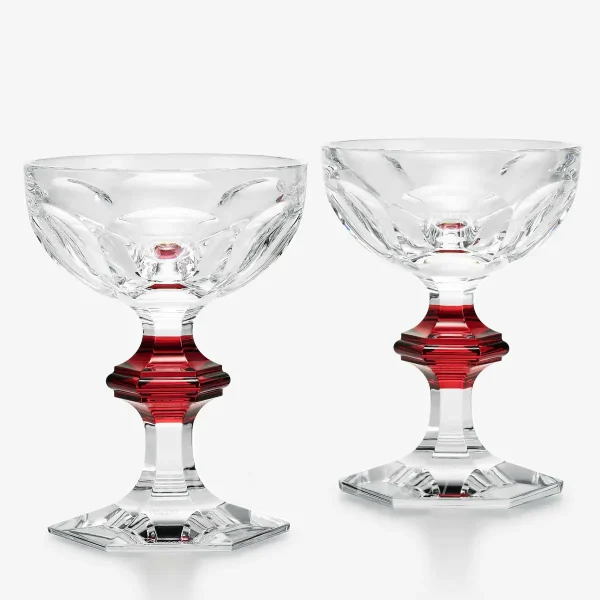
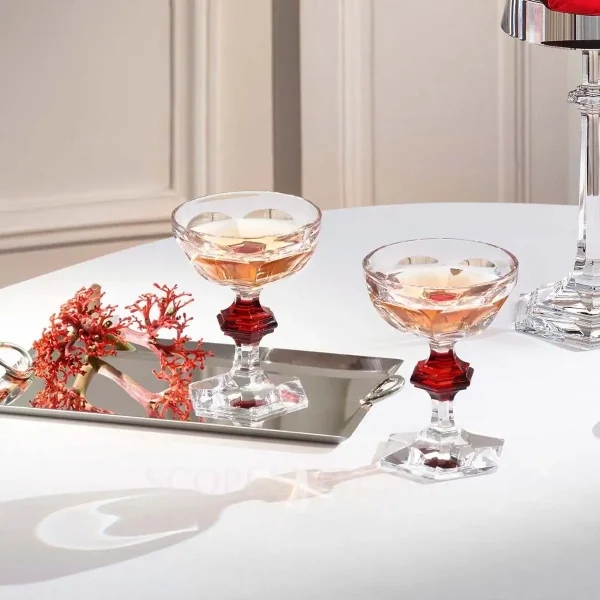
The coupe has a rounded, saucer-like bowl. It is more forgiving to carry, holds a drink with a little more security and has an unmistakably vintage, pre-Deco glamour. It suits a martini, a Manhattan or a daiquiri equally well, which makes it the most versatile choice for a home bar. We have written separately about the return of the Champagne coupe if you want to explore the shape in more depth.
Smaller, taller bowls
Between the two sits a family of narrower, higher-sided glasses, the best known being the Nick and Nora, which we cover in a dedicated guide. For the purpose of this article it is enough to know that they hold less, spill less and concentrate aromas more.
Modern and sculptural interpretations
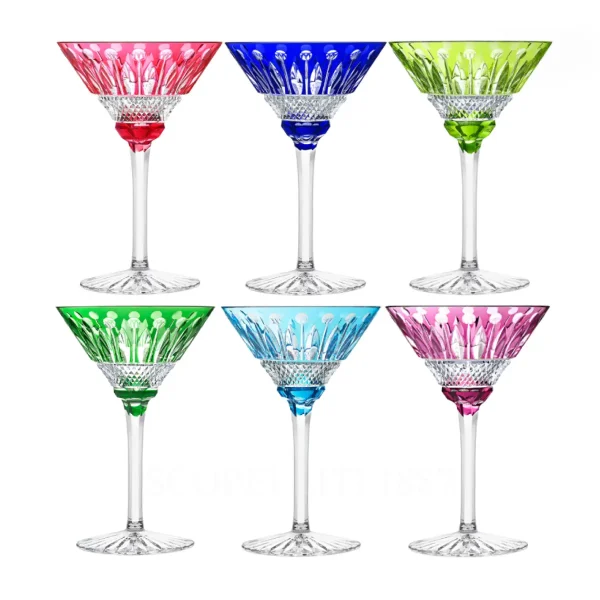
Crystal houses and designers also reinterpret the form: faceted bowls, coloured stems, cut feet or asymmetric profiles. These pieces are often chosen as much for the way they look on a bar cart as for the drink itself. Handled carefully, they make a set feel personal rather than generic.
Stemmed or stemless martini glasses?
Stemless versions are popular, and it is easy to see why. They are stable, easy to store and less vulnerable to snapped stems in the dishwasher. Some come as a double-walled or nested design in which a small bowl sits in a larger vessel filled with crushed ice.
The trade-off is temperature. A martini has no ice in the glass, so the palm wrapped around a stemless bowl warms it quickly. That is precisely the problem the stem was designed to solve. For a relaxed evening or an outdoor terrace, a stemless piece is a reasonable compromise. For a proper dry martini served at its best, we would always recommend a stem.
A practical middle ground exists: a shorter stem. Short-stemmed cocktail glasses keep fingers off the bowl, sit more securely on a table and fit more easily into cabinets. For many households this is the most comfortable everyday option.
Crystal or glass: what really changes
This is the question clients ask us most often, and the answer is more tangible than many expect. According to the Corning Museum of Glass definition of lead glass, true lead crystal contains a high percentage of lead oxide, at least 20 percent of the batch. That composition gives the material a higher refractive index and therefore more brilliance, and it makes the glass relatively soft, which is why it lends itself so well to wheel cutting and faceting.
In practical terms, crystal offers three advantages in a cocktail glass:
- Clarity and sparkle. A cold, clear martini in a crystal bowl catches light in a way ordinary soda-lime glass rarely does.
- Finer rims. Crystal can be worked thin, so the lip of the glass almost disappears against the mouth.
- Decoration. Cut, engraved and moulded patterns are only really possible in a material soft and bright enough to reward them.
There are also lead-free crystalline glasses today, which offer much of the brilliance and a good degree of durability. Neither is simply “better”; the right choice depends on how often you entertain, how you wash your glasses and whether you want a statement piece or a workhorse. Our complete buyer’s guide to luxury crystal glassware explains these materials and the great maisons in detail.
Capacity: why smaller is usually better
A classic martini is a short drink. Once stirred and diluted, a typical serving occupies only part of a well proportioned bowl. When a glass is too large, two things happen: the drink looks meagre, or the host overpours to fill the space, and in both cases the last sips are warm.
That is why we generally steer clients towards moderate capacities, roughly in the 150 to 200 ml range (about 5 to 7 fl oz), and away from the oversized glasses of the 1990s. A smaller glass has another advantage worth mentioning: it invites a second, freshly made round rather than one long, tepid one. If you enjoy larger drinks such as a Cosmopolitan or an espresso martini, a slightly bigger coupe is more practical than a huge V-shape, which becomes almost impossible to carry without spilling.
Check the stated capacity rather than trusting a photograph, and consider pouring a measured serving of water into a sample glass before buying a full set. It is the simplest way to see whether the proportions suit the way you actually mix.
How to chill a martini glass properly
Because nothing in the glass keeps the drink cold, the glass itself has to start cold. There are two reliable methods.
The first is the freezer or refrigerator. Place the glasses inside for fifteen to thirty minutes before serving. This works beautifully for sturdy glass, but think twice with fine or decorated crystal: sudden temperature changes put stress on thin material, and you should never move a glass straight from the freezer into hot water or a hot dishwasher.
The second is the bartender’s method. Fill the glass with ice and a splash of cold water while you mix the drink, then discard the ice water just before straining. It takes a minute, suits delicate crystal and leaves an attractive light frost on the bowl. In our experience it is the method most hosts end up adopting once they try it.
Once the evening is over, wash crystal by hand in lukewarm water with a mild detergent and dry it with a lint-free cloth, holding the bowl rather than twisting the stem. Treated this way, good crystal keeps its brilliance for decades.
How to choose a luxury martini glass set
A fine set is a purchase you make once and pass on. Here is how we suggest approaching it, based on what we see clients value over the years.
Start from the drinks you actually serve
If your household drinks dry gin or vodka martinis, a classic V-shape or a slim coupe is ideal. If the repertoire ranges across Manhattans, sours and sparkling cocktails, a coupe covers more ground. Honest answers here prevent a beautiful set from gathering dust.
Weigh the glass in your hand
Look for balance rather than heaviness. A good cocktail glass feels steady when you pick it up by the stem, with the weight settled low, and the rim should be smooth and even. Pulled or hand-finished stems tend to have a grace that is hard to replicate by machine.
Consider the maison and the style
The great French crystal houses each have a distinct language. Baccarat is associated with bold cutting and brilliant clarity, Saint-Louis with centuries of cut and coloured crystal tradition, and Lalique with sculptural, satin-finished glass. If you are comparing them, our guide to French crystal glasses sets the three side by side. Italian and contemporary designers offer other routes, from colourful stems to minimalist forms.
Think in sets, and plan for breakage
Buy for the number of guests you usually host, plus one or two spares. With a continuing collection from an established maison, you can often replace a single glass years later, which is worth considering before you choose a one-off design.
Match the rest of the bar
This glass rarely lives alone. Consider how it sits beside your tumblers, a mixing glass and a decanter, and whether you want a coordinated line or an eclectic collection. Browsing our luxury cocktail glasses alongside the rest of the barware helps you picture the whole ensemble.
Key takeaways
The martini glass is a stemmed cocktail glass with a conical bowl, created for drinks served straight up without ice. Its sharp V-shape debuted at the 1925 Paris exhibition that launched Art Deco, and its form is functional: the stem keeps hands from warming the drink, the wide rim releases aromas and a broad foot gives stability. When choosing, compare the classic V-shape, which is elegant but spills easily, with the more forgiving coupe and smaller, taller bowls. Prefer a stem, or at least a short stem, over stemless designs for a truly cold drink. Lead crystal, with at least 20 percent lead oxide, offers more brilliance, finer rims and the possibility of cutting, while lead-free crystalline glass is a durable alternative. Choose moderate capacities of roughly 150 to 200 ml rather than oversized bowls, chill glasses with ice water or briefly in the refrigerator, and wash crystal by hand. A luxury set should reflect the drinks you serve, feel balanced in the hand, suit your other barware and come from a collection you can add to over time.
Frequently asked questions about the martini glass
Why is a martini glass shaped like a V?
The V-shape comes from Art Deco design of the 1920s, but it is also practical. A martini is served without ice, so the long stem keeps the warmth of your hand away from the drink, the wide rim opens up the aromas of the spirit and garnish, and a foot similar in width to the rim keeps the glass stable.
What is the difference between a martini glass and a coupe?
A martini glass has a straight-sided conical bowl, while a coupe has a rounded, shallow bowl. Both serve drinks straight up. The V-shape looks sharper and more architectural; the coupe is easier to carry without spilling and suits a wider range of cocktails, from Manhattans to daiquiris.
What size martini glass is best?
For a classic martini, a moderate glass of roughly 150 to 200 ml (about 5 to 7 fl oz) is ideal. It shows the drink in good proportion and lets you finish it while it is still cold. Oversized glasses encourage overpouring and warm, diluted final sips.
Are stemless martini glasses a good idea?
Stemless designs are stable and easy to store, but your hand warms the drink quickly because there is no ice in the glass. They work for casual occasions; for a properly cold martini, a stemmed or short-stemmed glass is the better choice.
Can I put crystal martini glasses in the freezer?
Sturdy glasses can be chilled in the freezer, but fine or decorated crystal is better chilled in the refrigerator or by filling it with ice water for a minute before serving. Avoid sudden temperature changes, such as moving a frozen glass into hot water, which can stress thin crystal.
Finding the glass that suits your table
A well chosen cocktail glass is a small object that does a great deal: it keeps the drink cold, frames its colour and sets the tone of an evening before the first sip. Decide on the shape that fits your cocktails, favour a stem and sensible proportions, and choose a material and maison whose style you will still love in twenty years.
If you would like guidance on a specific collection, or help assembling a complete bar set, our team has been advising families since 1887. Contact us: speak with our specialists about your cocktail glasses. Or, if you prefer to browse first, Discover the collection: explore our tableware and barware.