

Hermès Tableware Collections Guide
Hermès tableware represents a complete design universe where porcelain becomes a language of craftsmanship, artistic heritage, and decorative identity. Each collection expresses a distinct aesthetic vision inspired by architecture, nature, equestrian culture, and global decorative traditions.
This guide explains the main Hermès tableware collections, focusing on their design differences, visual codes, and stylistic direction, to help understand how each universe shapes the table experience.
Understanding Hermès Tableware Design Language
Hermès tableware collections are not defined by a single aesthetic direction, but by a structured system of distinct design languages that interpret porcelain through different cultural, artistic, and material references. Each collection expresses a specific creative vision of the table, where form, decoration, and function are unified through a coherent visual identity.
Rather than following a unified style, Hermès develops its tableware as a curated universe of parallel expressions, each built around a precise design code. These codes determine how a collection behaves visually: some are grounded in architectural geometry and rhythm, others in botanical composition, figurative storytelling, equestrian heritage, or chromatic exploration.
Understanding these differences is essential to interpreting the Hermès tableware universe, as each collection is not simply decorative, but represents a specific design philosophy applied to porcelain. This framework allows the table to be composed with intention, combining different visual worlds depending on the atmosphere, formality, and aesthetic direction desired.
For clarity, these collections can be grouped into distinct design families based on their dominant visual language:
Geometric & Contemporary Collections
Mosaïque au 24
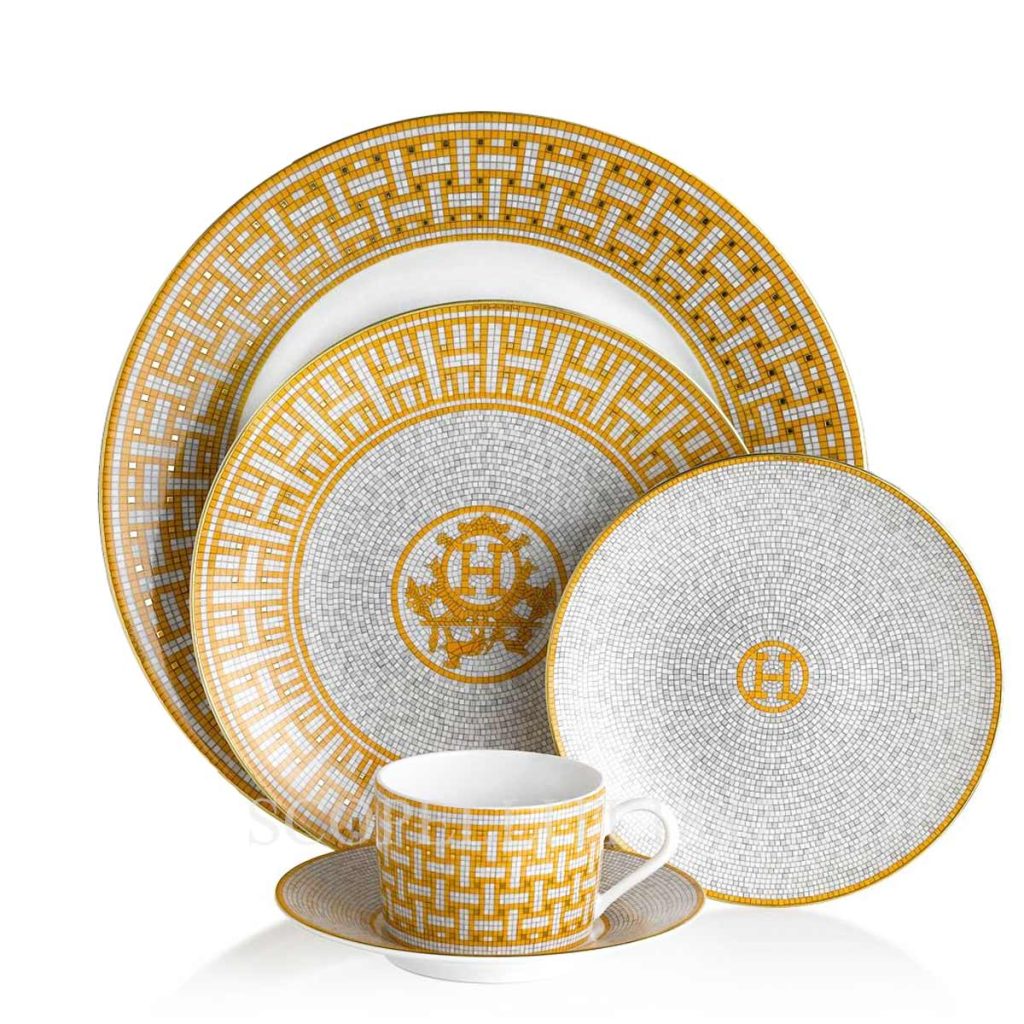
Mosaïque au 24 is one of the most iconic Hermès tableware universes, inspired by the geometric mosaic floor of the historic flagship at 24 Faubourg Saint-Honoré in Paris. It translates this architectural reference into porcelain through precise symmetry, structured rhythm, and refined ornamental detailing.
The design is defined by a sense of formal balance. Gold accents highlight the geometric construction, creating a luminous surface that feels both decorative and architecturally disciplined. The result is a tableware system where order and ornament coexist in controlled harmony.
Rather than expressing everyday casual dining, Mosaïque au 24 is conceived as a complete ceremonial service. Its extensive range—from plates and bowls to cups and serving pieces—allows for highly structured table compositions where every element reinforces a sense of visual precision.
This collection is particularly suited to formal dining environments, celebratory occasions, and interiors where classical elegance and architectural clarity define the atmosphere of the table.
Mosaïque au 24 Platinum
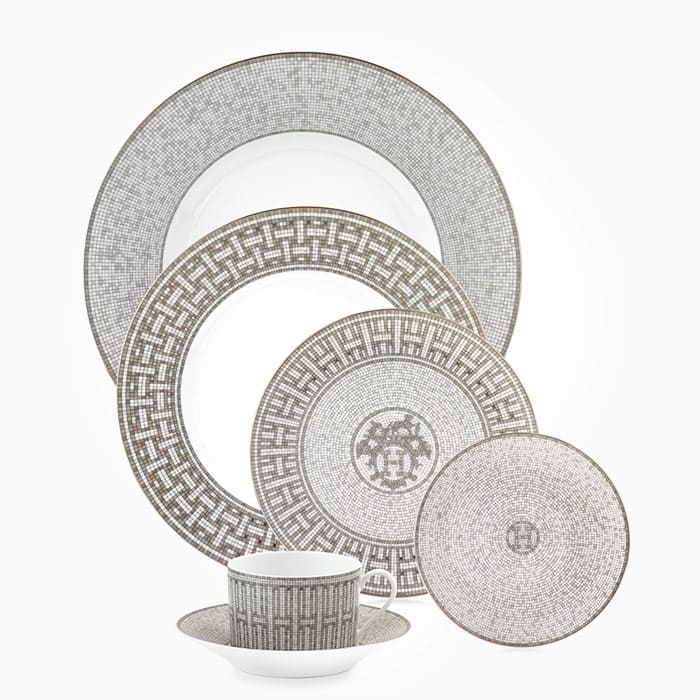
Mosaïque au 24 Platinum reinterprets the same architectural geometry and rhythmic symmetry of the original collection, inspired by the mosaic floor of the Hermès boutique at 24 Faubourg Saint-Honoré in Paris.
While preserving the original structure, this version replaces gold detailing with platinum accents, creating a cooler and more contemporary aesthetic language. The result is a more restrained visual identity, defined by clarity, precision, and modern elegance.
It maintains full compatibility with the Gold version across all formats, allowing mixed table compositions between warm and cool metallic tones. It is often selected for contemporary interiors and minimalist luxury tables where subtle contrast and architectural purity are preferred.
H Déco
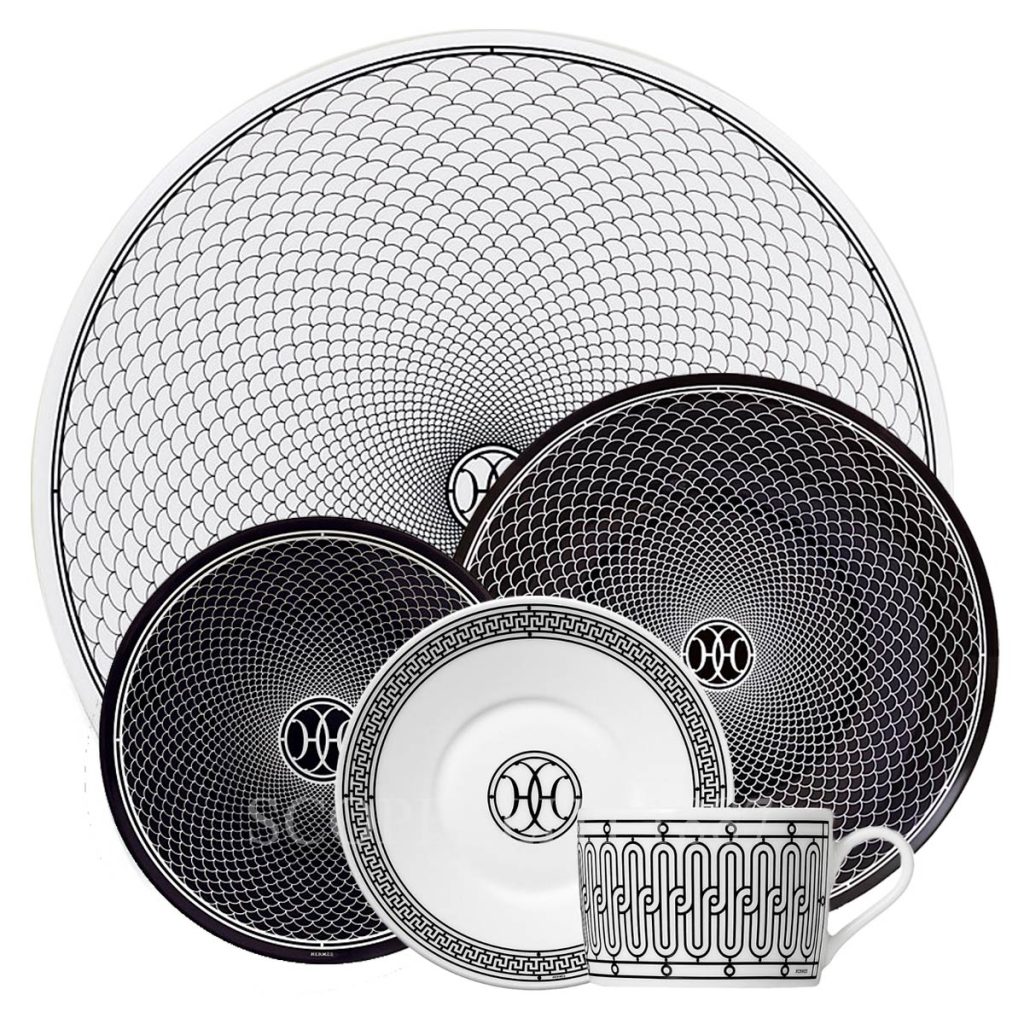
H Déco is one of the most graphic and architecturally defined Hermès tableware collections, inspired by wrought-iron decoration in historic Hermès Parisian buildings. It translates architectural heritage into a black-and-white porcelain system based on geometric rhythm and structural precision.
The collection is defined by a strong monochrome duality: white porcelain expresses classical purity, while black porcelain introduces a sculptural, contemporary presence. This contrast creates a highly recognisable visual identity.
The system includes dinner plates, fruit plates in white and black (including coupe forms), bread plates in both colours, bowls in multiple sizes, salad bowls, oval serving platters, mugs, espresso cups, and white tea cups. Black coffee cups add a more modern accent.
A sculptural black teapot acts as a central design object, while an oversized black serving plate functions both as presentation piece and decorative centerpiece.
H Déco is particularly suited for modern interiors, monochrome table settings, and Asian-inspired compositions where contrast, structure, and visual clarity define the aesthetic.
Nature & Botanical Collections

Passifolia
Passifolia is one of the most immersive Hermès tableware universes, inspired by dense tropical vegetation and botanical ecosystems. It translates natural abundance into porcelain through layered foliage, intricate plant forms, and rich green tonal depth that creates a sense of movement across the table.
Unlike more restrained botanical interpretations, Passifolia embraces visual saturation. Each piece contributes to a continuous landscape rather than a repeating pattern, giving the impression of a living, unfolding natural environment.
The collection spans a full dining service, from plates and bowls to cups and serving pieces, allowing the entire table to become a cohesive botanical composition.
Passifolia is best suited for expressive interiors and dining settings where nature is not a detail but the central visual language—ideal for tables that aim to feel immersive, decorative, and scenographic.
Carnets d'Equateur
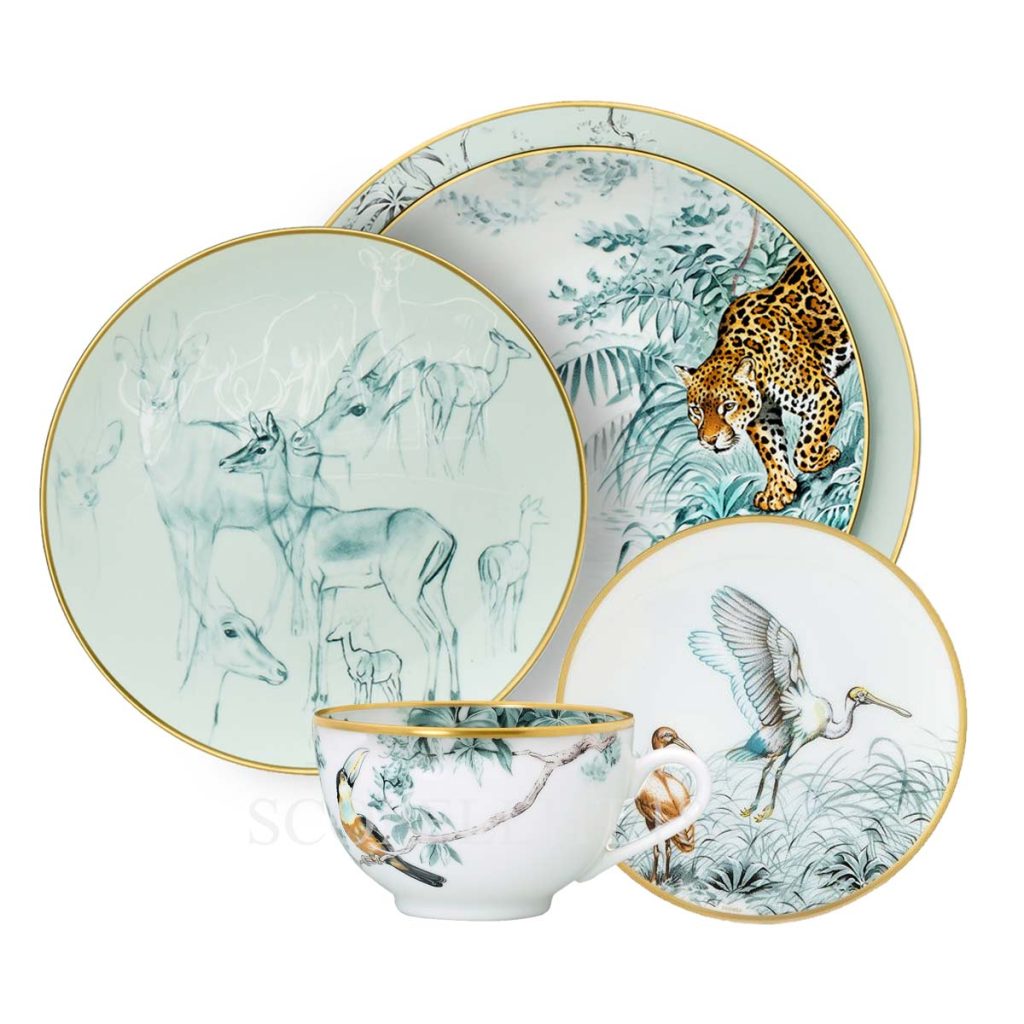
Carnets d’Équateur is one of the most artistic and narrative-driven Hermès tableware collections, inspired by the wildlife illustrations of naturalist Robert Dallet. It transforms porcelain into a visual journal of equatorial ecosystems, where each piece functions as a fragment of a larger illustrated world.
The collection is defined by figurative storytelling, featuring finely rendered wildlife such as jaguars, elephants, monkeys, birds, lions, panthers, and impalas. Each element presents a unique composition rather than a repeating pattern, making every piece visually distinct and highly collectible.
This creates a tableware system that functions like a curated gallery, where porcelain becomes both functional object and artistic surface.
The service includes dinner plates, dessert plates with different animal compositions, bread plates with bird and feline motifs, and soup plates with a unified design language. Multiple bowl formats in different sizes allow layered table compositions.
Breakfast cups highlight individual animal illustrations, while serving pieces such as oval platters and a soup tureen extend the narrative into larger formats for shared dining.
Carnets d’Équateur is particularly suited for statement tables, collector-oriented interiors, and dining environments where storytelling and artistic expression define the aesthetic experience.

A Walk in the Garden
A Walk in the Garden expresses a more delicate and restrained interpretation of botanical inspiration. Rather than density or visual abundance, it focuses on light floral compositions and soft natural tones that introduce a sense of calm and everyday refinement.
The design language is intentionally understated. Botanical elements are present but never dominant, allowing the porcelain to integrate seamlessly into both relaxed and more formal table settings without visual disruption.
The collection includes a complete dining service designed for versatility, where proportions and decoration remain balanced across all elements to support daily use as well as informal entertaining.
A Walk in the Garden is particularly suited for interiors that favour softness and clarity, offering a quiet botanical presence that enhances the table without defining it.
Equestrian Heritage Collections
Cheval d'Orient
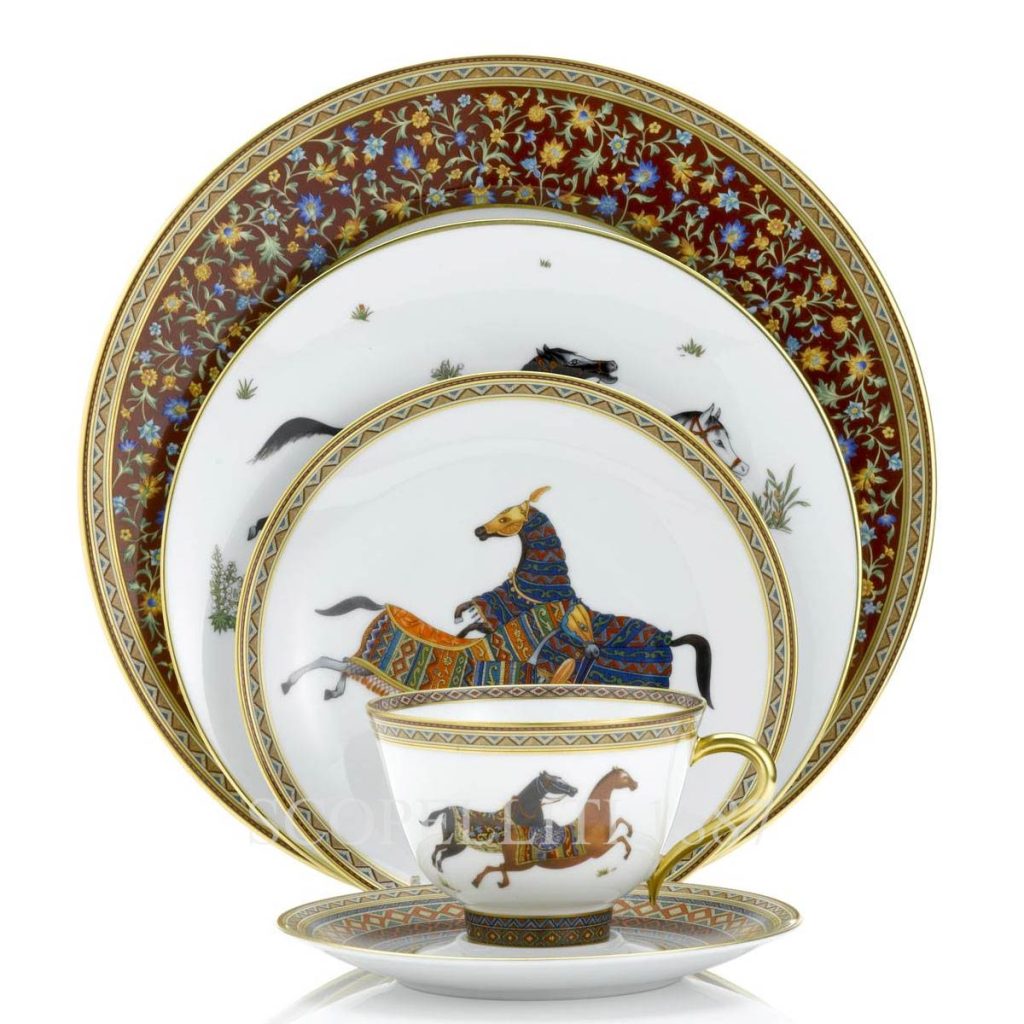
Cheval d’Orient is one of the most richly decorative Hermès tableware collections, inspired by equestrian culture and Oriental artistic traditions. It combines detailed horse illustrations with ornamental patterns, creating a layered visual language where storytelling and decoration are fully integrated.
Each piece is designed as part of a narrative composition rather than a repetitive pattern system. Tea and coffee cups are particularly distinctive, as they feature different horse illustrations, making every item unique within the service.
This approach gives the collection a strong collectible identity, where each table setting becomes visually varied yet stylistically coherent.
The service includes dinner plates, dessert plates, bread plates, soup plates, bowls in multiple formats, teacups, coffee cups, and serving pieces designed for structured yet expressive compositions.
Cheval d’Orient is particularly suited for formal entertaining and statement tables, where ornamentation, narrative detail, and visual richness define the dining experience.

Tressages Équestres
Tressages Équestres is a Hermès tableware collection inspired by braided leatherwork and traditional equestrian craftsmanship. The design translates saddle-making techniques into a refined porcelain motif based on interlaced geometric structures.
The collection is defined by a continuous woven visual language that creates rhythm and unity across all pieces, without figurative decoration or strong chromatic contrast.
This makes it a more architectural and textural interpretation of equestrian heritage, where structure replaces imagery.
The collection includes dinner plates, dessert plates, bread plates, bowls, and serving pieces, all unified by the braided motif that ensures visual continuity across the table.
Tressages Équestres is particularly suited for refined, restrained table settings where craftsmanship, texture, and subtle patterning are preferred over decorative complexity.

Attelage Flatware
Attelage is a Hermès flatware collection inspired by carriage harnesses and equestrian equipment. It translates saddlery craftsmanship into functional design, expressed through clean lines, balanced proportions, and refined detailing.
Unlike porcelain collections, Attelage focuses on material and tactile precision, offering a minimalist interpretation of equestrian heritage through cutlery design.
The collection is available in stainless steel, silver-plated, and gold-plated finishes, allowing different aesthetic expressions while maintaining the same design language.
It includes forks, knives, spoons and serving pieces designed to integrate seamlessly with Hermès porcelain collections without visual dominance, ensuring overall table harmony.
Color & Artistic Expression
Bleus d’Ailleurs
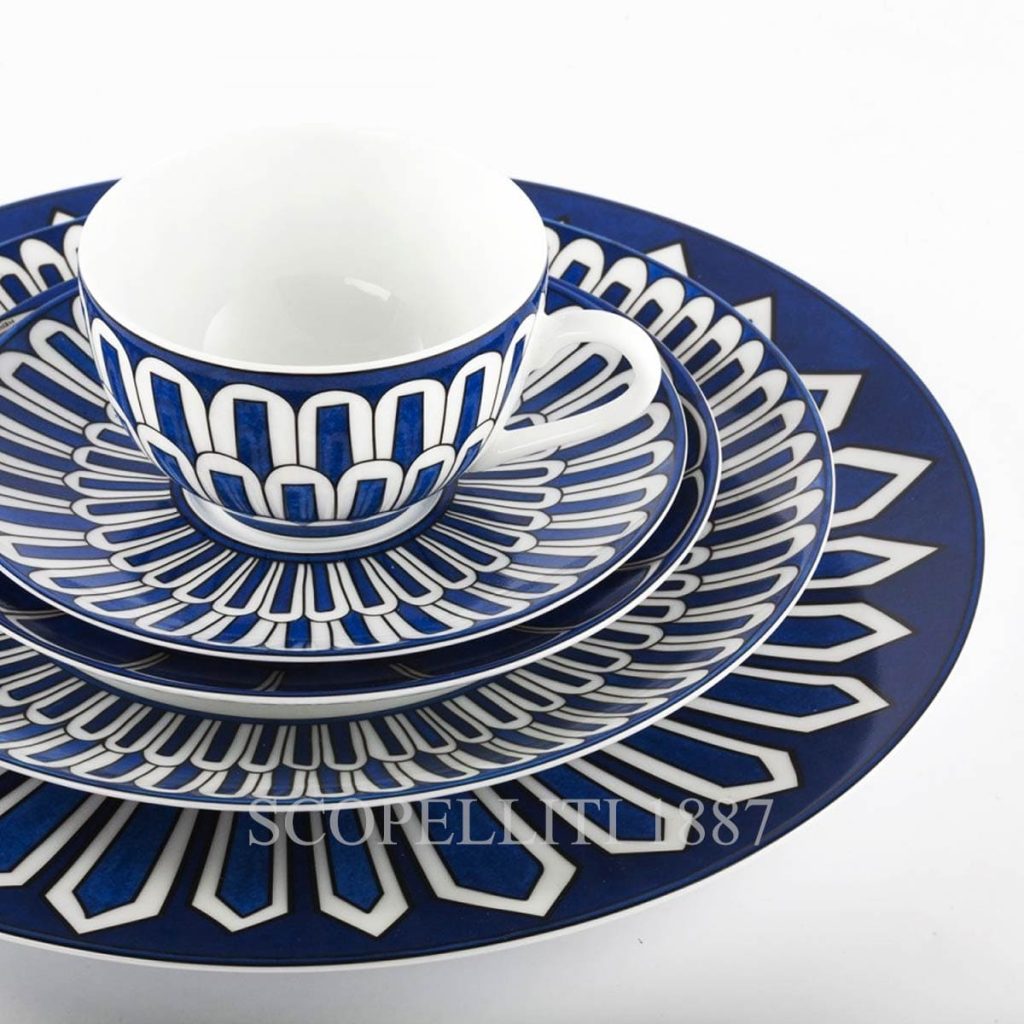
Bleus d’Ailleurs is a Hermès porcelain collection inspired by global ceramic traditions, reinterpreting historical blue-and-white codes through a contemporary, travel-inspired lens. It blends Eastern and Western decorative influences into a “nomadic blue” aesthetic defined by deep cobalt tones and intricate ornamental detailing.
The design language is built on rhythm, pattern variation, and cultural references rather than figurative storytelling, making it one of the most versatile Hermès tableware systems.
The collection includes dinner plates, dessert plates, soup plates, bread plates, bowls, teacups, coffee cups, mugs, and serving pieces designed for layered table compositions.
Bleus d’Ailleurs is particularly suited for classic interiors, Mediterranean-inspired dining, and contemporary tables where blue acts as a structured decorative anchor.
It also integrates naturally with Soleil d’Hermès thanks to shared proportions and coordinated formats, allowing warm and cool chromatic combinations within the same table setting.

Soleil d'Hermès
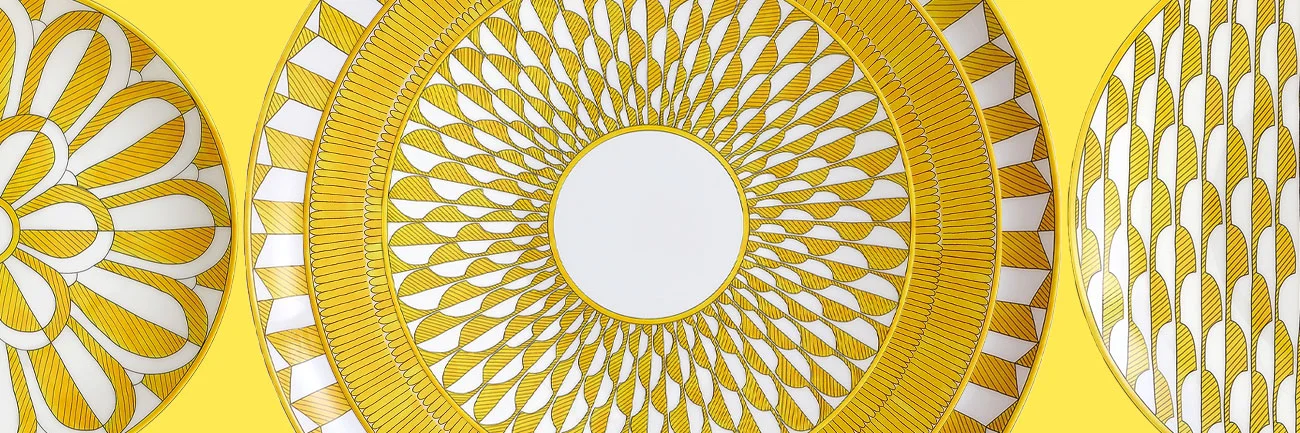
Hermès Soleil d’Hermès collection is a luminous porcelain collection defined by warm golden tones inspired by sunlight and Mediterranean light atmospheres. It expresses a softer, radiant interpretation of Hermès tableware, focused on brightness, warmth, and visual fluidity.
Unlike more graphic collections, its identity is based on light reflection and tonal warmth rather than contrast or pattern complexity.
The collection includes dinner plates, dessert plates, bowls, cups, and serving pieces designed with balanced proportions and a subtle golden decorative rhythm.
Soleil d’Hermès is particularly suited for daytime dining, seasonal tables, and Mediterranean-style interiors where light becomes part of the table design.
It is also designed to pair with Bleus d’Ailleurs, creating structured warm–cool contrasts within curated table compositions.
Balcon du Guadalquivir
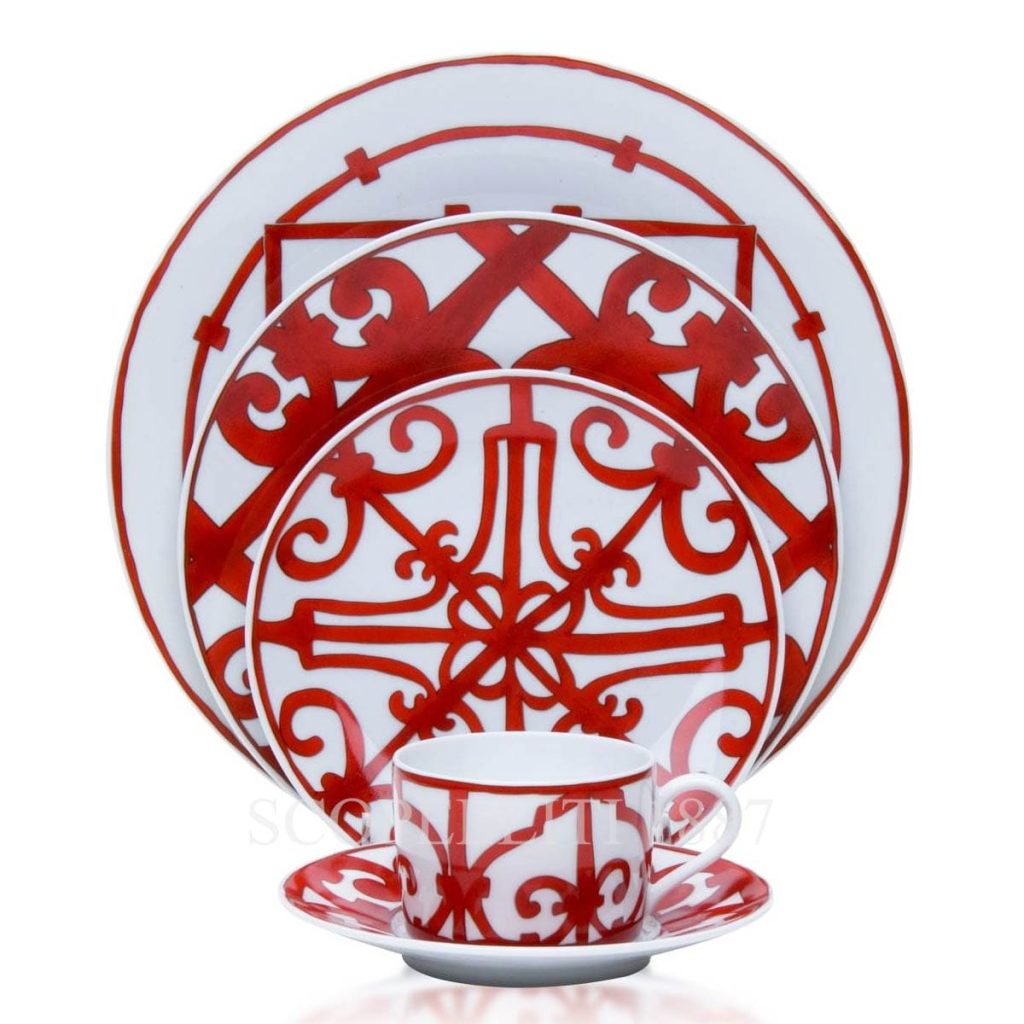
Balcon du Guadalquivir is a highly expressive Hermès tableware universe inspired by the architectural rhythm of Andalusian balconies and the decorative language of southern Spain. It transforms these references into porcelain through structured geometry, ornamental repetition, and a strong chromatic identity centered on deep red tones.
Unlike more restrained Hermès collections, this design embraces visual intensity. Its patterns are not background decoration but active compositional elements that shape the entire table setting, giving each piece a strong presence within the overall mise en place.
The collection includes a complete dining service—plates in multiple formats, bowls of varying proportions, cups, and serving pieces—designed to create layered, highly coordinated tables where pattern and colour become the focal point.
Balcon du Guadalquivir is best suited for tables where the design is meant to be seen and felt immediately: Mediterranean-inspired interiors, festive dining, and statement settings where contrast, warmth, and architectural ornament define the atmosphere.
Children's Collection

Animaux Nattes
Animaux Nattes is a Hermès porcelain collection designed for children, featuring soft animal illustrations and gentle storytelling elements that introduce the Maison’s artistic universe in an accessible and playful form.
While adapted for younger users, the collection maintains the same craftsmanship standards, material quality, and design precision as adult Hermès tableware, ensuring continuity within the broader porcelain ecosystem.
The visual language is defined by simplified animal motifs and soft, friendly compositions that encourage familiarity with nature and storytelling through tableware. Each piece is designed to feel approachable while still reflecting the refinement of Hermès design codes.
The collection includes plates, bowls, and cups designed in child-friendly proportions, creating a coordinated dining set that balances functionality, safety, and visual harmony. The designs are intended to support everyday use while introducing children to the aesthetic world of fine tableware.
Animaux Nattes is particularly suited for family dining environments where design continuity between adult and children’s tableware is valued, allowing a coherent aesthetic experience across generations.
Comparative Guide: Choosing Between Hermès Tableware Collections
Hermès tableware is designed as a constellation of distinct design languages rather than a unified aesthetic system. Each collection expresses a precise creative identity, making the choice less about function alone and more about visual philosophy, atmosphere, and lifestyle.
The following comparisons help clarify how these universes relate to one another and which direction they best serve on the table.
🏛 Architectural vs Graphic Expression
Mosaïque au 24 vs H Déco
Mosaïque au 24 and H Déco represent two of the most structured interpretations of Hermès porcelain, yet they articulate very different design intentions.
Mosaïque au 24 is rooted in ornamental architecture, inspired by the historic mosaic floor of the Hermès flagship at 24 Faubourg Saint-Honoré. Its identity is defined by symmetry, golden rhythm, and luminous decorative precision. The result is a refined expression of formal Parisian elegance.
H Déco, by contrast, translates architectural ironwork into a monochrome graphic language. Its black-and-white contrast introduces a more contemporary and sculptural reading of the table, where structure replaces ornamentation.
In essence:
- Mosaïque au 24 expresses decorative heritage and luminous formality
- H Déco expresses architectural clarity and modern graphic restraint
🌿 Botanical Intensity Spectrum
Passifolia vs A Walk in the Garden
Passifolia and A Walk in the Garden explore nature through two opposing sensibilities: immersion and subtlety.
Passifolia is dense, vibrant, and visually immersive. Tropical foliage builds layered compositions across porcelain surfaces, creating a sense of depth and botanical abundance. It transforms the table into a vivid natural landscape.
A Walk in the Garden offers a more restrained interpretation of nature. Its floral language is light, soft, and atmospheric, designed for everyday elegance and visual calm.
In essence:
- Passifolia expresses nature as immersion and visual richness
- A Walk in the Garden expresses nature as softness and quiet refinement
🟦 Colour as Design Identity
Bleus d’Ailleurs vs Soleil d’Hermès
Bleus d’Ailleurs and Soleil d’Hermès define two chromatic universes within Hermès porcelain.
Bleus d’Ailleurs is built around structured cobalt blue compositions inspired by global ceramic traditions. Its rhythm is precise, ornamental, and culturally layered, creating a sense of visual architecture through colour.
Soleil d’Hermès moves in the opposite direction: it is defined by warmth, luminosity, and golden light. Rather than structure, it expresses atmosphere, evoking Mediterranean brightness and sunlit surfaces.
In essence:
- Bleus d’Ailleurs expresses structure, rhythm, and cultural blue heritage
- Soleil d’Hermès expresses warmth, light, and atmospheric golden tones
🎨 Narrative vs Ornamental Expression
Carnets d’Équateur vs Cheval d’Orient
Carnets d’Équateur and Cheval d’Orient both embrace storytelling, yet through entirely different visual grammars.
Carnets d’Équateur is a naturalist universe, where wildlife illustrations function as individual artworks. Each piece feels like a fragment of a curated illustrated journal, making the collection highly expressive and collectible.
Cheval d’Orient draws from equestrian heritage and decorative Oriental influences, combining ornamental detail with narrative horse motifs. Its identity is richer in pattern and symbolism, creating a more decorative and ceremonial aesthetic.
In essence:
- Carnets d’Équateur expresses narrative through naturalist illustration
- Cheval d’Orient expresses narrative through ornamental equestrian symbolism
🧭 Everyday Elegance vs Statement Dining
A Walk in the Garden vs Balcon du Guadalquivir
A Walk in the Garden and Balcon du Guadalquivir represent two different approaches to daily dining atmosphere.
A Walk in the Garden is subtle, light, and adaptable. It is designed for daily use where elegance is present but never dominant.
Balcon du Guadalquivir is expressive and architectural, defined by strong Andalusian references, geometric rhythm, and bold chromatic presence. It is designed to shape the table visually rather than accompany it quietly.
In essence:
- A Walk in the Garden expresses quiet, everyday refinement
- Balcon du Guadalquivir expresses bold, architectural statement dining
Which Hermès Tableware Collection Should You Choose?
Selecting a Hermès tableware universe depends on the atmosphere you wish to create rather than function alone.
- For formal architectural dining → Mosaïque au 24, H Déco
- For immersive botanical tables → Passifolia
- For soft everyday elegance → A Walk in the Garden
- For colour-driven compositions → Bleus d’Ailleurs, Soleil d’Hermès
- For narrative or collectible expression → Carnets d’Équateur, Cheval d’Orient
- For bold Mediterranean identity → Balcon du Guadalquivir
Each collection defines not only a table setting, but a distinct visual philosophy of living.
FAQ
What are Hermès tableware collections?
Hermès tableware collections are themed porcelain lines that each represent a different artistic universe, combining illustration, craftsmanship, and decorative design.
What are the main Hermès tableware collections?
The main Hermès tableware collections include Mosaïque au 24, H Déco, Bleus d’Ailleurs, Passifolia, Soleil d’Hermès, Carnets d’Équateur, and A Walk in the Garden.
What is the difference between Mosaïque au 24 Gold and Platinum?
Mosaïque au 24 Gold features warm gold detailing for a more classic and luxurious aesthetic, while the Platinum version uses cooler tones for a more contemporary and minimalist interpretation.
What is Hermès Mosaïque au 24 inspired by?
Mosaïque au 24 is inspired by the mosaic floor of the Hermès flagship store at 24 Faubourg Saint-Honoré in Paris, reflected in its geometric pattern design.
What is Hermès H Déco style?
H Déco is a monochrome geometric collection defined by its repeating “H” motif, offering a structured, architectural, and modern aesthetic.
Which Hermès tableware collection is the most famous?
Mosaïque au 24 is widely considered the most famous Hermès tableware collection due to its iconic design and strong visual identity.
Which Hermès tableware collections are modern?
H Déco and Mosaïque au 24 Platinum are considered the most modern Hermès collections thanks to their geometric structure and minimalist design language.
Which Hermès tableware collections are floral or nature-inspired?
Passifolia and A Walk in the Garden are nature-inspired collections featuring botanical motifs, rich colours, and detailed illustrative compositions.
What is Hermès Passifolia inspired by?
Passifolia is inspired by tropical botanical gardens and lush vegetation, expressed through dense foliage and vibrant colour compositions.
Can Hermès tableware collections be mixed together?
Yes, Hermès tableware collections can be combined through colour harmony, contrast, or thematic balance to create layered table settings.
What makes Hermès tableware different from other luxury porcelain brands?
Hermès tableware is distinguished by its narrative design approach, where each collection is developed as a complete artistic world rather than a repeating decorative pattern.
Where to explore Hermès tableware
The full selection of Hermès tableware collections can be explored on the Scopelliti 1887 Hermès category page, where each collection universe is presented in detail.
Customer Support
Our team is available for assistance with orders and product availability.
Contact us via WhatsApp at +39 391 345 6441.

