Choosing a cognac glass is the single decision that most changes what you smell and taste in a fine brandy, yet it is usually made by habit. The balloon snifter from old films, the slim tulip used in the cellars of Charente, a small stemmed nosing glass borrowed from the wine cupboard: each one handles the same spirit very differently. After more than a century advising collectors and hosts from our house in Reggio Calabria, we have seen beautiful bottles of XO served in glasses that muted every nuance, and modest VSOPs come alive in the right crystal. This guide explains why shape matters, how the snifter, tulip and balloon compare, how to hold and whether to warm the glass, what to look for in crystal, and how to serve cognac and armagnac so that the glass works for the spirit rather than against it.
Why the shape of a cognac glass matters
Cognac is an aromatic spirit before it is anything else. Its character is built slowly: by law, it cannot be sold before a minimum of two years of ageing in oak, and the official categories rise from VS (at least two years) to VSOP (four), XO (ten) and XXO (fourteen). Those years in wood produce layers of dried fruit, vanilla, spice, flowers and rancio that are volatile and fragile. A glass is essentially a small aroma chamber, and its geometry decides which of those compounds reach your nose, in what order and at what strength.
Three dimensions do most of the work. The bowl sets the surface area of spirit exposed to air, so a wider bowl releases more vapour. The chimney, meaning the way the glass narrows towards the rim, gathers that vapour and concentrates it. The rim diameter controls how much of the concentrated aroma arrives at once, and where the liquid lands on the tongue. Get the balance wrong and alcohol dominates: ethanol evaporates faster than the more delicate aromatic compounds, so a very wide bowl with a very wide opening delivers a hot, prickly first impression. Get it right and the heat recedes behind the fruit and wood.
This is why the Bureau National Interprofessionnel du Cognac, the body that represents the appellation, recommends serving cognac neat in a tulip or stem glass, noting that the slightly closed shape locks in the aromas and reveals them gradually. It is a useful starting point, but not the whole story.
Snifter vs tulip vs balloon: the three classic shapes
The vocabulary is used loosely, so it helps to define the shapes before comparing them. If you want a broader map of glassware first, our guide to types of drinking glasses and which drink suits each one places the brandy family alongside wine, champagne and whisky glasses.
The brandy snifter
A brandy snifter has a short stem, a wide rounded bowl and a rim noticeably narrower than the bowl. It was designed to be cradled in the palm, with the stem slipping between the fingers. The large surface area throws off plenty of aroma, and the inward curve traps some of it. For a young, fruity VS or a relaxed after-dinner pour, a moderately sized snifter is comfortable and generous. Its weakness is scale: many snifters are simply too big, so a normal measure sits as a thin film at the bottom and the alcohol rises straight up the wide chimney.
The tulip glass
The tulip glass has a longer stem, a smaller egg-shaped bowl and a rim that closes in and then flares very slightly, like the petals of the flower. The professional ISO tasting glass and most modern nosing glasses belong to this family. Because the bowl is compact and the chimney tall, aromas are concentrated and layered: you meet the top notes first, then the deeper wood and spice as you swirl. The long stem also keeps your hand away from the bowl, so the spirit stays at room temperature. For VSOP, XO and older single-cru bottlings, this is the shape most cellar masters reach for.
The balloon glass
The balloon is the exaggerated snifter: an almost spherical bowl, often very large, on a short stem. It is theatrical and makes a wonderful object on a bar cart, but it is the least precise of the three for tasting. The open volume above the liquid lets alcohol vapour build up, and when you bring your nose to the rim the first sensation is often heat. Balloons do have a role, particularly for older, gentler spirits served in a small measure where a little extra aeration can be welcome, or for cognac poured over a single large ice cube.
How the shapes compare in practice
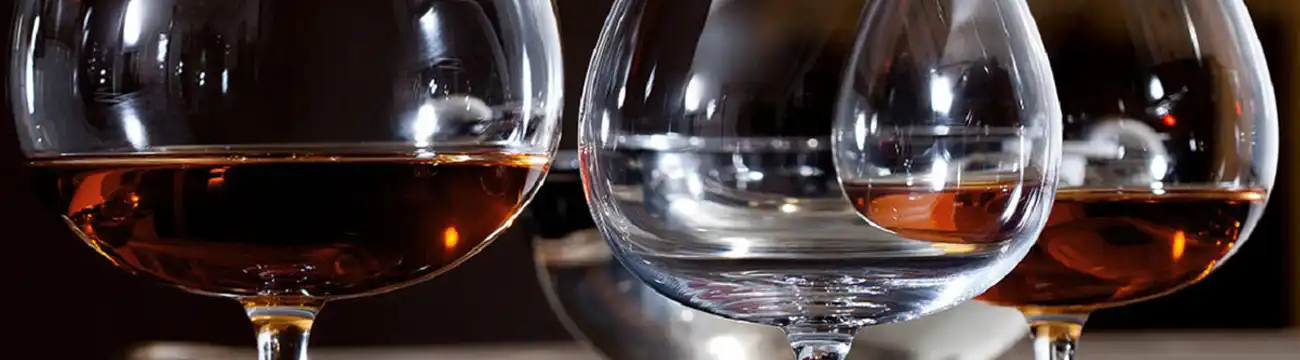
If you set the same XO in all three glasses side by side, the differences are immediate. The tulip gives the tightest, most detailed nose; you can pick out candied orange, then leather and cedar. The snifter is broader and warmer, pleasant but less defined. The balloon is expansive, and the alcohol reads first. None of this is a matter of snobbery. It is physics and the way our sense of smell responds to concentration.
A practical rule we give clients is to match the glass to the moment. For serious tasting and for the oldest bottles, choose a tulip. For conversation after dinner, when the glass will be held for half an hour, a compact snifter feels right in the hand. Keep the balloon for long drinks, ice or display. Many households find that one set of tulips and one set of smaller snifters covers everything, and we would rather see two good sets than six mediocre ones.
How does this differ from whisky? The logic overlaps, but the spirits behave differently, and whisky drinkers often favour a heavy tumbler or a Glencairn-style nosing glass. We cover that side in depth in our connoisseur’s guide to crystal whisky glasses, which is a useful companion if your bar holds both.
How to hold a cognac glass, and whether to warm it
The image of a gentleman cupping a huge snifter over a candle flame is persistent, and it is worth retiring. Heating the glass with a flame or hot water pushes ethanol out ahead of everything else and flattens the aromas that took a decade or more to develop. Even Rémy Martin, one of the historic houses, observes that modern cellars have made warming unnecessary and that excessive heat reveals little more than alcohol notes.
That said, the hand still has a role. A cognac served straight from a cool cellar or cabinet can feel closed. Here the snifter comes into its own: cradle the bowl in your palm for a few minutes and the spirit will warm by a degree or two, gently opening. With a tulip, hold the stem while nosing and tasting so that the temperature stays stable, and only wrap your hand around the bowl if the cognac seems tight.
A good sequence looks like this:
- Pour a modest measure, enough to cover the widest part of the bowl without filling it.
- Let the glass rest for a minute or two before the first nose; this lets the most aggressive vapour dissipate.
- Nose without swirling first, keeping your nose at the rim rather than inside the glass.
- Swirl gently and nose again; the Cognac interprofession describes this as the second nose, when the core aromatic character emerges.
- Take a small sip and hold it briefly before swallowing.
Keep your mouth slightly open while nosing. It sounds odd, but it reduces the sting of alcohol and lets you perceive more fruit.
Choosing crystal for a cognac glass
Once the shape is settled, material decides how the glass feels and how long it lasts. Fine crystal allows a thinner rim than ordinary soda-lime glass, and a thin rim matters more than people expect: the spirit flows onto the tongue without the lip of the glass getting in the way. Crystal also has greater clarity and a higher refractive index, so the amber and mahogany tones of an old cognac glow in the light, which is part of the pleasure.
Traditional lead crystal, as produced by houses such as Baccarat and Saint-Louis, is weighty, brilliant and can be cut deeply, which is why it dominates heirloom brandy services. Lead-free crystal glass has become very refined and is often lighter and more resistant to the dishwasher, making it a sensible choice for glasses used every week. Mouth-blown stemware tends to be finer at the rim; machine-made pieces are more uniform and sturdier. There is no single right answer, only a question of how the glasses will be used.
When we help a client choose, we ask a few questions. Will the glasses be used for tasting, or mainly for serving guests? Should they match an existing decanter or whisky service? Is a cut pattern wanted, or a plain bowl that shows the spirit? Cut crystal is magnificent on the table, but a heavily faceted bowl makes it harder to judge colour. A plain tulip paired with a cut crystal decanter as the centrepiece of the bar is a combination that works well. You can browse our current selection of spirits glasses in fine crystal to see the range of shapes side by side.
Serving cognac and armagnac at home
Cognac and armagnac are cousins, both grape brandies from south-west France aged in oak, but they are not identical. Cognac is produced under strict rules: its production guidelines require double distillation, completed by 31 March of the year after the harvest. Armagnac is traditionally distilled once in a column still, which tends to give a more rustic, full-flavoured spirit with pronounced prune and earthy notes. That extra texture means armagnac can take a slightly larger bowl, and a snifter often suits it beautifully, while delicate Grande Champagne cognacs reward the precision of a tulip.
A few serving habits make a real difference:
- Temperature: serve at cool room temperature, never chilled unless you are deliberately making a long drink.
- Measure: a small pour tastes better than a large one; you can always add more.
- Clean glasses: any residue of detergent or dust shows up immediately on the nose.
- Water: a few drops can open a cask-strength or very old spirit; add it with a pipette or teaspoon.
Care is simple but important. Rinse crystal by hand in warm water, avoid strongly scented detergents, and dry with a lint-free cloth while the glass is still warm. Our guide on how to clean crystal glasses and keep them brilliant goes through the details, including how to store stemware without trapping stale air in the bowl.
Building a brandy service that lasts
Is it worth owning dedicated cognac glasses at all, when a small white wine glass will do? For occasional use, a wine glass is a perfectly reasonable stand-in. But anyone who keeps a few good bottles soon notices the difference a proper glass makes, and a well-chosen set becomes part of the ritual of the evening. It is also one of the most appreciated gifts we see chosen for milestone birthdays and retirements, often paired with a bottle from the recipient’s birth year.
A sensible collection might start with six tulip glasses in fine crystal for tasting, add four or six compact snifters for relaxed evenings, and grow later with a decanter and matching tumblers. Choosing pieces from the same maison keeps the bar visually coherent, but mixing a plain tasting glass with a decorated decanter is equally elegant. Explore the wider luxury barware collection if you are planning a complete service.
Key takeaways
The right cognac glass concentrates the spirit’s aromas while letting the alcohol recede. The tulip glass, with its compact bowl, tall chimney and long stem, is the most precise choice and is the shape recommended by the Cognac interprofession for neat serving. The brandy snifter, with a wider bowl and short stem, is more relaxed and suits after-dinner drinking and fuller spirits such as armagnac, provided it is not oversized. The balloon glass is the least precise for tasting and is best kept for ice, long drinks or display. Do not heat the glass with a flame; at most, cradle a snifter in your hand for a few minutes if the spirit feels closed. Fine crystal offers a thinner rim and greater clarity, with lead crystal giving weight and brilliance and lead-free crystal offering durability. Serve at cool room temperature, pour modest measures, keep the glasses scrupulously clean, and build a small set of tulips and snifters rather than a large set of one compromise shape.
Frequently asked questions about cognac glass
What kind of glass is best for drinking cognac?
A tulip-shaped glass with a stem is the best all-round choice for drinking cognac neat. Its compact bowl and narrowing rim concentrate the aromas and reduce the sensation of alcohol, and the stem keeps the spirit at a stable temperature. A small brandy snifter is a good alternative for relaxed, after-dinner drinking.
What is the difference between a brandy snifter and a tulip glass?
A brandy snifter has a short stem and a wide, rounded bowl designed to be cradled in the palm, which releases more aroma and slightly warms the spirit. A tulip glass has a longer stem, a smaller egg-shaped bowl and a taller chimney, which focuses the aromas more precisely and keeps the hand away from the bowl.
Should you warm a cognac glass?
You should not heat a cognac glass with a flame or hot water, because heat drives off alcohol first and flattens delicate aromas. If a cognac feels closed because it is too cool, holding the bowl of a snifter in your hand for a few minutes is enough to open it gently.
Can you drink cognac from a whisky glass or wine glass?
Yes. A small white wine glass works well for cognac because its shape is close to a tulip. A tumbler is fine for cognac served over ice or in a long drink, but for tasting a fine VSOP or XO neat it lets too much aroma escape.
Is the same glass suitable for armagnac?
Armagnac can be served in the same tulip or snifter glasses as cognac. Because armagnac is often fuller and more rustic in style, many drinkers find a slightly larger snifter bowl suits it well, while delicate cognacs benefit most from a tulip.
Choosing your glasses with confidence
A fine cognac rewards the same attention you would give a great wine: the right shape, clean crystal, a modest pour and a little patience. Start with a tulip for tasting, add a compact snifter for evenings of conversation, and let the spirit rather than the glass take centre stage. If you would like help selecting a brandy service, matching glasses to an existing decanter or choosing a gift, our team is glad to advise.
Contact us: speak with our advisers about the right cognac glasses for your bar. Or discover the collection online.