Napkin folding has a reputation problem. Most of what circulates online is craft — swans, fans, elaborate constructions that require starching, take four minutes each and have to be handled extensively by whoever built them. On a table laid with good linen and fine porcelain, they look out of place. The folds that actually belong on a considered table are simpler, quicker and older, and they are chosen for how the napkin behaves when a guest picks it up, not for how it looks in a photograph.
The fabric decides the fold
Before choosing a fold, understand what your napkins will do. This is the step almost every guide skips, and it explains why the same fold looks crisp on one table and collapsed on another.
Pure linen holds a crease better than any other table fabric. Pressed damp, it will keep a sharp edge through an entire dinner, which is why it suits structured folds that need to stand. Cotton is softer and holds a moderate crease. Cotton-linen blends sit between the two. Polyester blends resist creasing almost entirely — attempt an upright fold and it will slump within minutes, so soft draped folds are the only sensible choice.
Size matters just as much. A dinner napkin is 50 to 55 cm square and can carry any fold. A lunch napkin at 40 to 45 cm suits simpler treatments. Anything below 35 cm is a tea napkin and should simply be folded in four. Attempting a structured fold on a small napkin produces something dense and fussy that unfolds into a creased square.
One preparation point governs everything: iron the napkin slightly damp, or press it with steam. A dry-pressed linen napkin will not take a sharp fold no matter how carefully it is handled.
Four folds that suit a formal table
Each of these napkin folding methods takes under thirty seconds and involves minimal handling of the surface the guest will use. Reference descriptions of the laid table treat the napkin as one component among the tableware used for serving and eating, and that is the right hierarchy: the napkin supports the cover rather than performing in front of it.
The simple rectangle
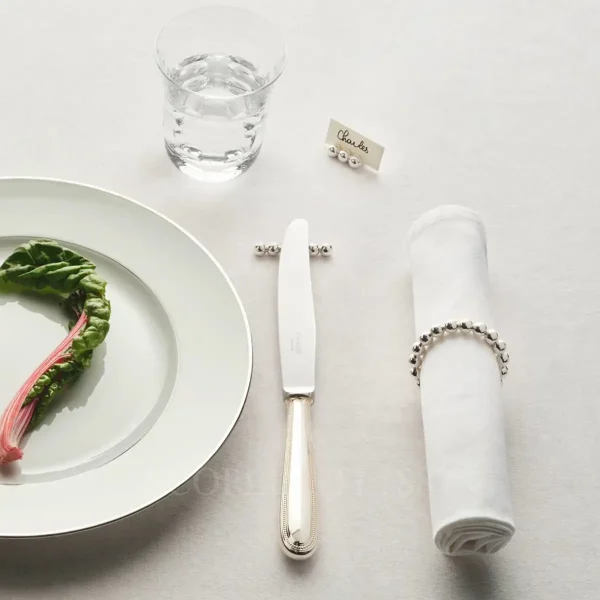
Fold the napkin in half, then in half again to form a rectangle, and lay it to the left of the forks with the folded edge towards the plate. That is the whole fold, and at the most formal tables it is frequently the correct one. Its restraint is the point: it puts the emphasis on the linen and the cover rather than on the folding.
The pocket
Fold in four, then fold back the top layer to create a diagonal pocket, and tuck the side edges under. The pocket holds a menu card, a sprig of herb or a place card. Practical and genuinely useful, and it works with cotton as well as linen.
The band or ring
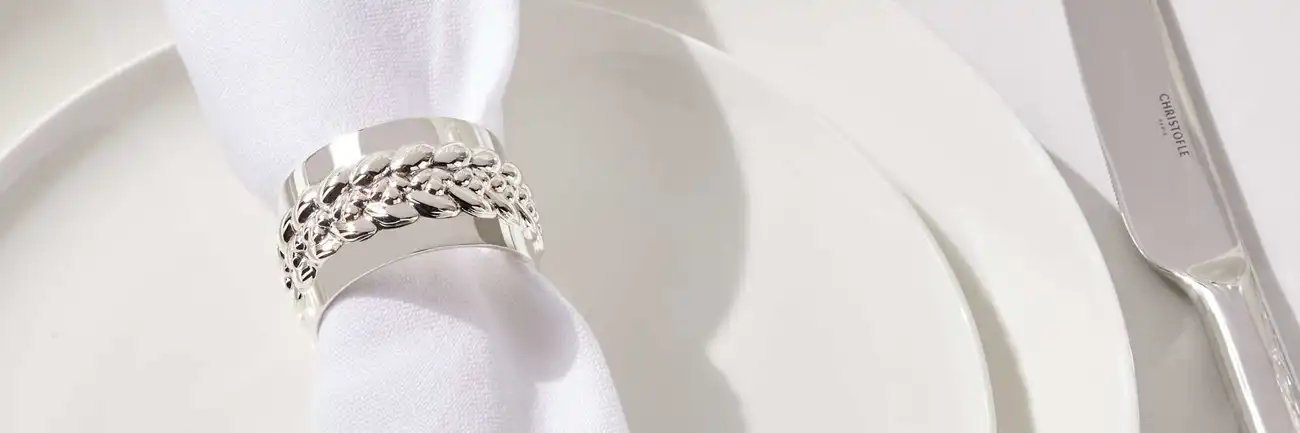
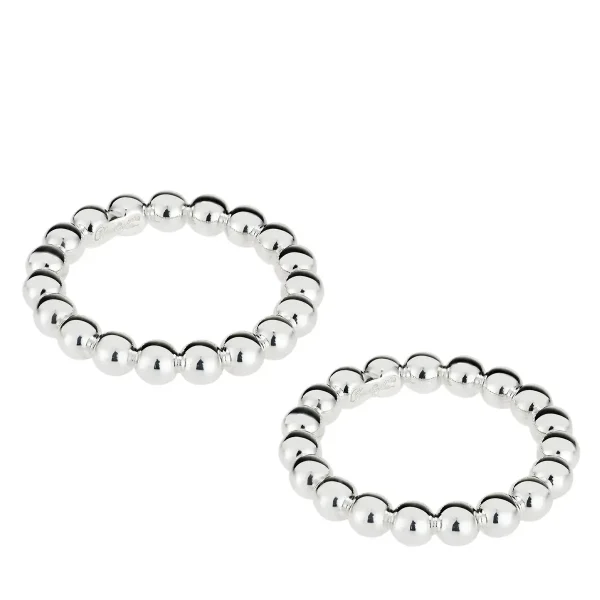
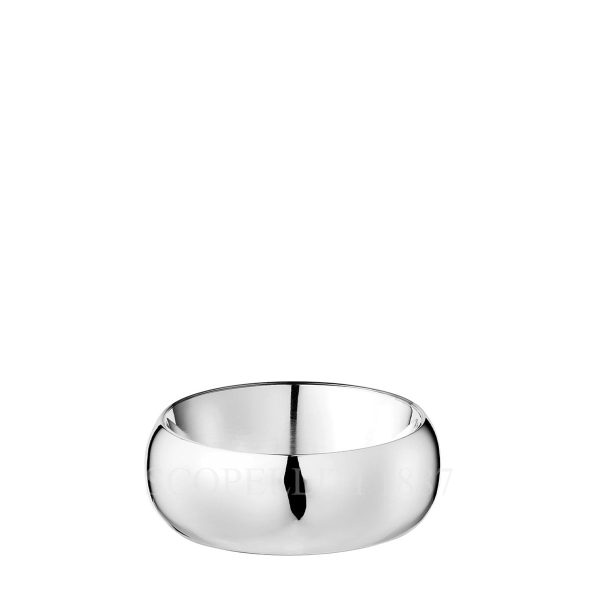
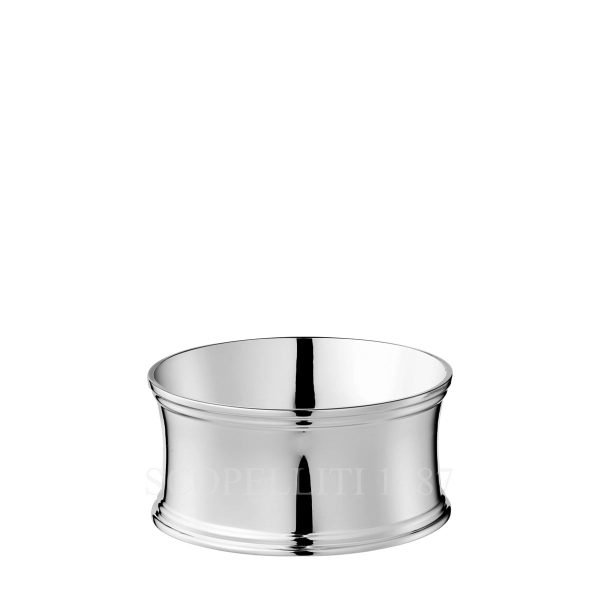
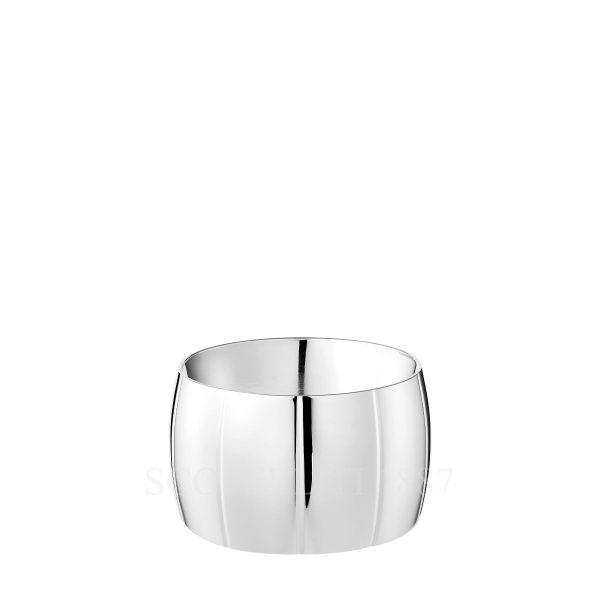
Fold the napkin lengthways into a long strip, roll it loosely, and slide it through a napkin ring. Laid to the left of the forks or across the plate, it suits tables where the linen has a decorative border, since the roll displays the edge. Silver or crystal rings tie the napkin to the rest of the service.
The plate drape
Fold in half diagonally to form a triangle, then drape it loosely across the centre of the dinner plate with the point towards the guest. Soft rather than structured, so it forgives fabrics that will not hold a crease. Use it when the plate is plain and needs a focal point.
Why the fold exists at all
Decorative napkin folding reached its height in seventeenth-century Europe, when the folded linen at a great table was a display of two things that were genuinely expensive: the quality of the linen itself, and the existence of household staff with time to fold it. Elaborate constructions were, quite literally, a way of showing that labour had been spent.
That history explains why the most formal contemporary tables have moved in the opposite direction. When the fold no longer signals anything about resources, complexity stops reading as luxury and starts reading as effort applied in the wrong place. What signals quality now is the linen — its weight, its whiteness, whether it has been pressed properly — and a simple fold is what lets the fabric be seen.
There is a hygiene argument running alongside the aesthetic one, and it is the more persuasive of the two. Every fold requires handling, and a construction with twelve steps means twelve opportunities to touch the surface a guest will bring to their mouth. Restaurants with serious standards fold simply for exactly this reason, and it is worth borrowing at home.
Where the napkin goes
Two positions are correct: to the left of the forks, or on the dinner plate. On the plate reads as more formal and gives the cover a centre; to the left is more practical when plates are served from the kitchen already filled.
A third position, tucked into a wine glass, is best avoided. It requires handling the part of the napkin that will touch a guest’s mouth, it leaves the glass smelling faintly of laundry, and it has to be removed before anything can be poured.
The etiquette that follows the fold is worth knowing, because it explains why elaborate constructions are impractical. The napkin goes on the lap when the host lifts theirs, folded in half with the fold towards the body if it is a large dinner napkin. If a guest leaves the table mid-meal it goes on the chair; returned to the table, it signals that they have finished. At the end it is laid loosely to the left of the cover and never refolded. A napkin that took two minutes to construct is destroyed in three seconds, which is the strongest practical argument for the simple rectangle.
Seasonal folds, and how to keep them restrained
There is room for more decorative treatment at Christmas and at celebrations, but the principle holds: let the addition do the decorating, not the folding.
A simple roll with a sprig of rosemary or a bay leaf under the ring reads as considered. The same napkin folded into a fir tree reads as a craft project. A band of ribbon in a colour picked up from the dinner service works; a napkin folded to imitate a flower does not, particularly on a table where real flowers are present.
Editorial coverage of festive tables tends to converge on the same conclusion, favouring a small number of straightforward Christmas folds rather than elaborate ones — a triangle with a short return fold, a roll, a simple pocket. The seasonal character comes from the colour of the linen and what is tucked into it.
Scale changes the calculation, too. Napkin folding for four people is a pleasant few minutes; for sixteen it is half an hour, and any fold requiring more than three movements becomes genuinely tedious by the eighth cover. For a large table, choose one simple fold and execute it identically at every place — uniformity across sixteen covers looks far more impressive than variety, and it is the only approach that stays consistent when you are tired at the twelfth setting.
One further practicality for a long table: fold and lay the napkins first, before the plates and cutlery. Reaching across a fully laid cover to position a napkin is how glasses get knocked, and it is easier to align the covers to a row of napkins than the reverse.
Because the fold and the fabric are two halves of one decision, the choice of napkin belongs with the choice of cloth and runner rather than being made separately — the weight, colour and border of the linen determine which folds are even available to you. That decision is covered in our guide to table linen. How the folded napkin sits within the finished cover, alongside the plate, cutlery and glass group, is set out in our guide to table setting.
Care, and why folds fail
When napkin folding fails, the fabric is almost always the culprit rather than the technique. Napkins that will not hold a fold are usually suffering from one of three problems, and all are fixable.
Fabric softener. It coats the fibres and destroys linen’s ability to take a crease, as well as reducing absorbency. Wash table linen without it.
Over-drying. Linen should come out of the machine damp and be ironed immediately, or dried flat and dampened before pressing. Tumbled to complete dryness, it becomes brittle and creases badly in the wrong places.
Storage on a hard fold. Napkins stored folded in the same place for years develop a permanent line along that fold, which eventually weakens and splits. Roll them, or refold along a different line each time they are put away.
Treat stains promptly and, above all, avoid chlorine bleach on good linen: it weakens fibres and yellows them over time. Cold water and time work better than heat and aggression, and a napkin that has been rescued gently will outlast one that has been bleached white twice. The wider service that the linen has to sit alongside is covered in our guide to luxury tableware.
Key points at a glance
The fabric decides which napkin folding is possible: pure linen holds a sharp crease and supports structured folds, cotton holds a moderate one, and polyester blends will slump, so only soft draped folds work. Iron napkins slightly damp or with steam, since dry-pressed linen will not take a fold. Size matters too — a 50 to 55 cm dinner napkin carries any fold, while anything under 35 cm should simply be folded in four. Four folds suit a fine table and each takes under thirty seconds: the simple rectangle, which is frequently correct at the most formal tables; the pocket, which holds a menu or place card; the roll through a napkin ring, which displays a decorative border; and the loose diagonal drape across a plain plate. Place the napkin to the left of the forks or on the dinner plate, never tucked into a glass. Keep seasonal decoration in the addition — a sprig of rosemary, a ribbon — rather than in elaborate folding, since any construction is destroyed the moment a guest picks it up. Avoid fabric softener and chlorine bleach, and vary the storage fold to prevent permanent creases.
Frequently asked questions about napkin folding
What is the easiest way to fold napkins for a dinner party?
Fold the napkin in half and in half again to form a rectangle, then lay it to the left of the forks with the folded edge facing the plate. It takes a few seconds, works with any fabric, and is entirely correct even at formal tables. If you want a little more presence with no more effort, roll the napkin lengthways and pass it through a napkin ring.
Where should the napkin be placed on the table?
To the left of the forks, or on the dinner plate. Both are correct: on the plate reads slightly more formal and gives the cover a focal point, while to the left is more practical when plates arrive from the kitchen already served. Avoid placing the napkin inside a wine glass, since it requires handling the surface the guest will use and must be removed before anything is poured.
Why will my napkins not hold a fold?
Usually one of three causes. Fabric softener coats the fibres and prevents linen taking a crease, so wash table linen without it. Over-drying makes linen brittle — it should be ironed while slightly damp or dampened before pressing. And a fabric with a high polyester content will not hold a structured fold at all, in which case a soft draped fold is the right choice rather than a fight with the material.
What size should a dinner napkin be?
A dinner napkin measures roughly 50 to 55 cm square, which is large enough for any fold and to sit comfortably folded in half across the lap. Lunch napkins are 40 to 45 cm and suit simpler treatments, while anything below about 35 cm is a tea napkin and should just be folded in four. Structured folds attempted on small napkins end up dense and creased.
Simple, pressed, and quick
Choose the fold your fabric can actually hold, press it damp, keep it simple, and put the decoration into what sits with the napkin rather than into the folding itself. A well-pressed rectangle of good linen outperforms an elaborate construction on every table worth laying.
Contact us if you are choosing table linen and want advice on weight, size and how it will behave — our specialists are happy to help.